


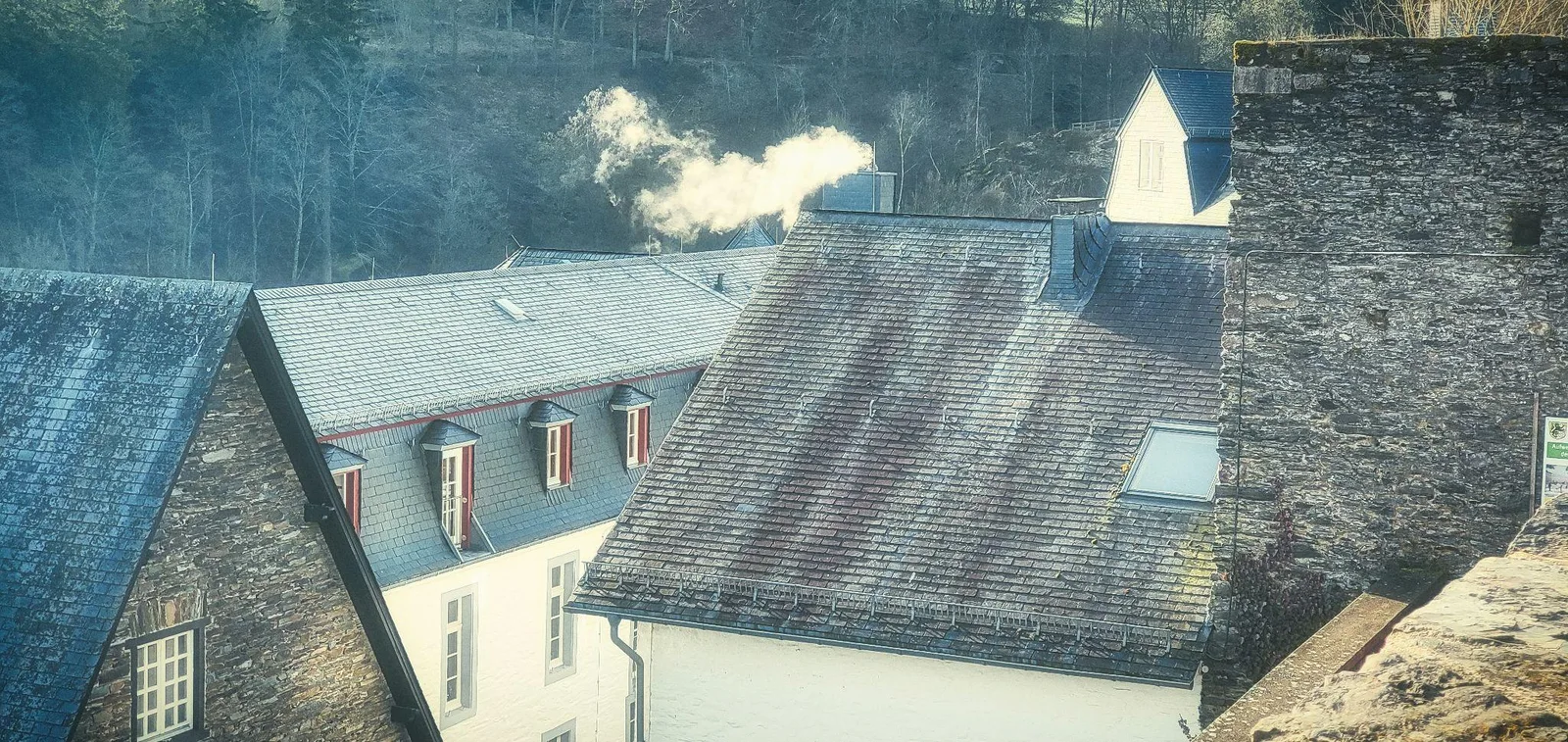
Few things are more frustrating than lighting a fire only to watch smoke drift back into your living room instead of rising up the chimney. Many homeowners assume it’s simply part of owning a fireplace, especially during the first fire of the season. In reality, persistent smoke is often an early warning that something isn’t functioning as it should.
While weather can sometimes be responsible, recurring smoke is usually a sign that your chimney needs attention. Understanding why it happens can help homeowners avoid bigger problems before the heating season is in full swing.
The Science of “Draft” and House Pressure
At its core, a chimney is designed to move smoke, combustion gases, and heat safely out of the home through a process known as draft. Draft occurs because hot air naturally rises. When the air inside the chimney is significantly warmer than the air outside, smoke is pulled upward and exits through the top of the chimney.
However, a chimney does not operate in a vacuum. Its performance relies on a delicate balance of internal and external factors:
- Temperature Differential: The greater the difference between the hot internal air and the cold external air, the stronger the upward suction.
- Indoor Air Pressure: Modern, energy-efficient homes are sealed tightly to prevent draftiness. However, modern HVAC systems, bathroom exhaust fans, and range hoods pull air out of the house. This creates negative indoor pressure that can actually pull air, and smoke, down through the chimney flue.
- Atmospheric Conditions: High humidity, sudden wind gusts over the chimney cap, or warm fall days significantly weaken natural draft strength.
This is why fall fires are particularly prone to smoking. After months of sitting unused through the summer, the chimney is cold, outdoor temperatures may still be relatively mild, and humidity levels remain high. Together, those conditions reduce the temperature difference that creates strong drafts, making it harder for smoke to travel upward during the first few fires of the season.
Quick Operational Fixes Before Calling a Pro
Fortunately, not every smoky fireplace signals a major repair. Sometimes the solution is as simple as:
- Fully Open the Damper: Ensure the mechanical throat or top-sealing damper is completely disengaged and clear of debris.
- Prime the Cold Flue: Before lighting your main wood stack, roll up a piece of newspaper, light it, and hold it near the open damper for 30-60 seconds. This creates a blast of heat that breaks the heavy pocket of cold air sitting in the flue, establishing an upward draft.
- Burn Seasoned Hardwood: Unseasoned or damp wood (wood with a moisture content above 20%) burns at a lower temperature, creating dense, cool smoke that struggles to rise.
- Equalize Room Pressure: Crack a window near the fireplace by an inch during ignition to supply the hearth with immediate fresh air and balance indoor pressure.
Internal Blockages: The Danger Behind the Wall
However, if smoke continues entering the living space every time the fireplace is used, the problem may extend beyond weather conditions.
Restricted airflow caused by creosote buildup, animal nests, damaged flue liners, deteriorating masonry, or other hidden obstructions can all prevent a chimney from drafting properly. Because these issues develop gradually, many homeowners don’t realize anything is wrong until smoke becomes noticeable indoors.
Smoke itself isn’t always the greatest concern. Instead, it often serves as the first visible symptom of a chimney system that is no longer operating safely or efficiently.
When draft is compromised, fireplaces become more difficult to operate, creosote can accumulate more rapidly, and the overall performance of the chimney declines. In some situations, damaged venting systems may also affect how combustion gases are exhausted, creating additional safety concerns that require professional evaluation.
The challenge is that many chimney problems cannot be identified simply by looking at the fireplace. Damage frequently develops inside the flue, where cracked liners, blockages, or deteriorating masonry remain hidden from view. By the time exterior warning signs appear, repairs may already be more extensive than they would have been if discovered earlier.
That is why recurring smoke should never be dismissed as a seasonal inconvenience. While temporary drafting issues caused by weather often resolve as temperatures drop, smoke that consistently enters the home deserves further investigation.
A professional chimney inspection, like the one that Chimney Scientists does, can determine whether the issue stems from normal environmental conditions or from an underlying structural problem that needs to be addressed. As one of the largest chimney companies across the U.S., and led by founder Joe Ochal, the team’s modern inspection equipment allows technicians to evaluate the entire chimney system, identifying hidden damage before it develops into more costly repairs or safety hazards.
For homeowners, the takeaway is simple: smoke is a message, not merely a nuisance. A properly functioning chimney should move smoke safely out of the home. When it doesn’t, the system is often signaling that something has changed.
Addressing those warning signs early helps preserve fireplace performance, improves home safety, and gives homeowners the opportunity to resolve small issues before they become expensive repairs during the busiest part of the heating season.