


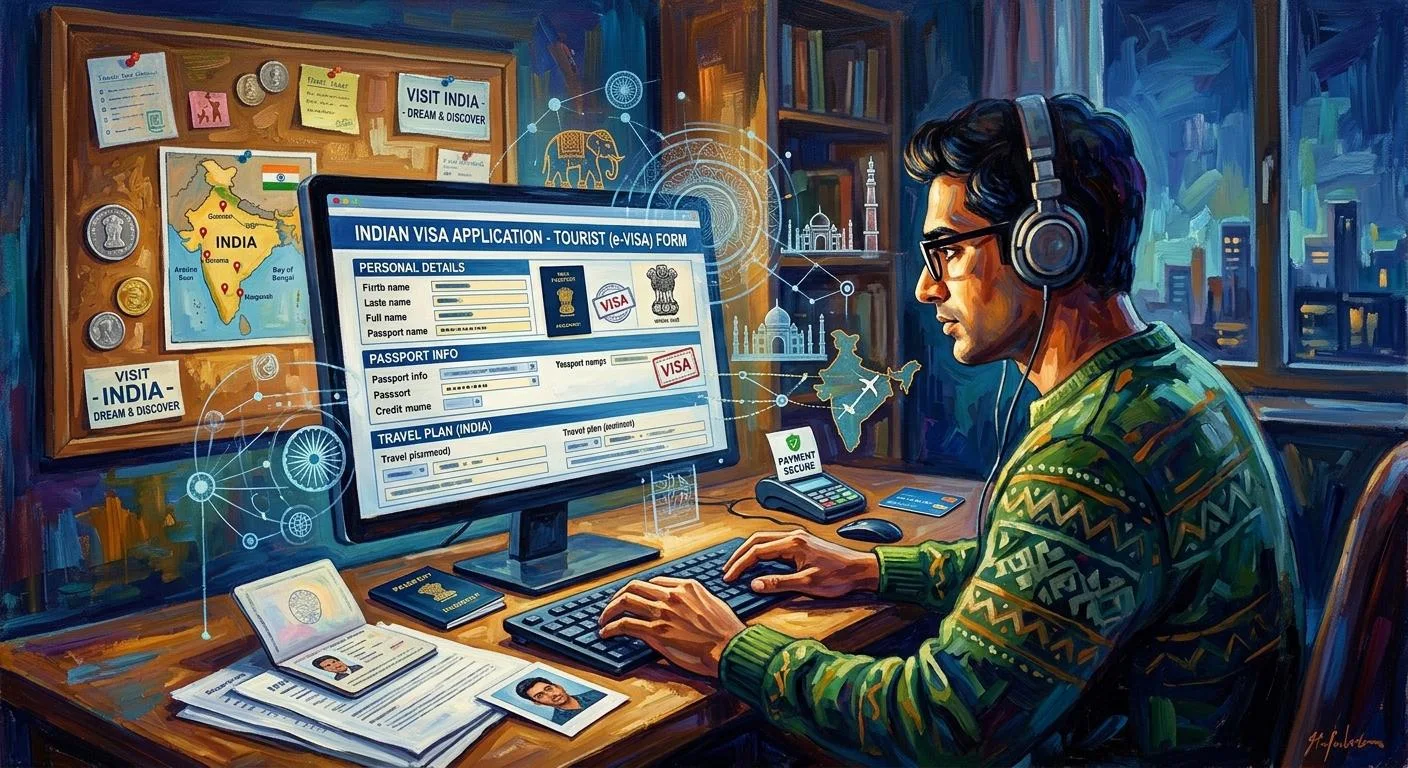
Travelers should distinguish the official e-Visa service from the regular visa process, which involves submitting documents through the designated channel.
WASHINGTON, DC, November 6, 2026 – American passport holders planning travel to India must carefully distinguish between the country’s electronic visa system and its traditional consular visa procedures, because the appropriate application route depends on the purpose of travel, immigration eligibility, intended duration, and documentation required by Indian authorities.
Although India offers electronic visas for many qualifying activities, including tourism, business, and medical treatment, a convenient online application does not eliminate the need for conventional visas for employment, extended education, residence, or other activities that require specialized immigration permission.
The distinction has become increasingly important as Indian authorities expand digital immigration services while maintaining separate application procedures for regular visas, creating potential confusion among American travelers who assume that completing an online form always removes the need to submit physical documents.
For tourists, business executives, families, and internationally mobile professionals, understanding these differences can prevent application errors, unexpected processing delays, airline boarding issues, and immigration complications that may disrupt otherwise carefully planned international journeys.
India Maintains Separate Electronic and Regular Visa Systems
India offers two main application pathways for foreign visitors: eligible applicants can apply for electronic visas through a government-administered digital platform, while conventional visa procedures remain available through diplomatic missions and designated application centers.
The distinction goes beyond administrative convenience because each pathway supports specific immigration categories, documentation requirements, and processing arrangements that determine whether a traveler can obtain permission without submitting a physical passport for consular examination.
According to the Government of India’s official visa application portal, foreign nationals generally need valid passports and appropriate visas or recognized immigration permissions, and the website offers separate application routes for electronic visas and regular paper visas.
American travelers should identify the right immigration category before starting an application, rather than choosing the electronic option only because it seems faster or requires fewer initial administrative steps.
Electronic Visas Provide a Convenient Application Route
India’s e-Visa system lets eligible American passport holders submit applications electronically, upload required documents, and pay the applicable government charges without typically presenting their physical passports at an Indian embassy or consulate.
The process begins with an online application requesting personal information, passport details, nationality, proposed travel dates, and other details relevant to the requested visa category, followed by submitting supporting documentation and payment.
Applicants generally receive an electronic travel authorization after approval, which they should retain for presentation when required by transportation providers and Indian immigration authorities during the journey and subsequent arrival procedures.
The electronic format simplifies administrative preparation for many travelers, but approval remains subject to government assessment, and the resulting visa carries conditions governing its validity, permitted activities, authorized entry arrangements, and duration of stay.
India Offers Several Electronic Visa Categories
India’s electronic visa program covers multiple travel purposes, and its current government portal identifies categories including tourism, business, medical treatment, study, transit, film production, and other specialized activities, each with its own eligibility requirements.
Tourists may qualify for electronic visas valid for 30 days, one year, or five years, although the conditions governing entry and length of stay vary by the authorization selected.
Business travelers can apply under the appropriate electronic business visa category when their proposed activities meet Indian immigration requirements, while individuals seeking medical treatment may qualify for dedicated medical visas and accompanying attendant arrangements.
However, the availability of a category in the electronic system does not mean every American applicant qualifies, because nationality, travel purpose, supporting documents, and specific restrictions still determine eligibility.
Tourist Visa Validity Must Be Distinguished From Length of Stay
American citizens planning tourism in India may face several visa validity options, so it’s essential to distinguish the period during which a visa may be used from the maximum time permitted inside the country.
India offers electronic tourist visas with different validity periods, while eligible United States citizens may also obtain regular tourist visas valid for up to ten years under applicable consular arrangements.
Indian consular guidance states that American travelers with qualifying tourist visas are subject to a maximum combined tourist stay of 180 days per calendar year, whether their travel involves electronic or regular tourist permission.
A visa valid for five or ten years, therefore, does not authorize uninterrupted residence throughout that period, because visitors remain subject to the applicable entry conditions, cumulative stay limitations, and immigration requirements.
Travelers planning repeated visits should calculate their time carefully and avoid assuming that a brief departure from India automatically resets every restriction associated with their tourist immigration status.
Regular Visas Require a Different Submission Procedure
India’s traditional visa application process remains available for American citizens who need immigration categories outside the electronic program or who prefer a conventional visa when available.
The regular process begins with an online application, but applicants must subsequently print and sign the completed form before submitting their passports and supporting documents through the channel designated for the relevant Indian diplomatic mission.
The Government of India’s regular visa instructions state that applicants must submit the signed application and required documents to the appropriate Indian Visa Application Center or diplomatic mission, following the applicable appointment and processing procedures.
In the United States, Indian consular guidance identifies VFS Global as an authorized service provider for regular visa applications in relevant jurisdictions, with submission arrangements that may include appointments, designated centers, and permitted postal procedures.
American travelers should verify the requirements of the Indian mission serving their residence because administrative procedures, supporting documentation, appointment availability, and submission methods may differ according to jurisdiction and visa category.
Employment and Residence Require Additional Consideration
American citizens intending to accept employment in India should not assume an electronic business visa provides unrestricted authorization to work, because Indian immigration regulations distinguish qualifying business visits from employment arrangements that require different permission.
Activities such as commercial negotiations, attending meetings, or exploring business opportunities may fall within an appropriate business visitor classification, while employment involving local duties, compensation arrangements, or contractual services may require an employment visa.
Long-term education, research, family residence, and other specialized purposes may also fall under immigration categories with distinct eligibility conditions, so review current government guidance rather than rely on general descriptions of electronic visa availability.
Individuals planning to remain in India beyond ordinary visitor periods should additionally consider whether registration, residence documentation, or other post-arrival immigration obligations apply to their particular visa category and intended duration.
Passport Validity and Blank Pages Remain Essential
India’s electronic visa guidance requires applicants to hold passports that meet specified validity standards, including at least six months of remaining validity at the time of application and enough blank pages for immigration endorsements upon arrival.
The government generally requires at least two blank passport pages, and travelers must also have appropriate onward or return transportation arrangements and sufficient financial resources for their intended stay.
These requirements can complicate travel for American citizens whose passports remain legally valid but no longer meet the destination’s minimum validity rules, especially when they arrange international travel close to the document’s expiration date.
Travelers should therefore check their passport condition, remaining validity, and available pages before applying, and allow adequate time for renewal when the existing document does not meet applicable Indian immigration standards.
Electronic Visa Entry Points Are Restricted
One important limitation of India’s electronic visa program concerns entry locations, because holders must enter through authorized immigration checkpoints rather than assuming that electronic permission allows arrival at every international airport, seaport, or land crossing.
India publishes lists of designated airports and seaports that accept electronic visa holders, with arrangements depending on the immigration category and the current authorization granted by government authorities.
These restrictions can affect travelers entering India after visiting neighboring countries, especially when an itinerary involves land transportation from Nepal, Bangladesh, or another adjoining jurisdiction rather than arrival through an approved international airport.
Regular visa holders may have access to different entry arrangements, subject to applicable restrictions, so the intended route matters when choosing between electronic and conventional visa procedures.
American travelers planning complex regional itineraries should confirm the permitted entry checkpoint before booking transportation, since an otherwise valid electronic visa may not authorize the selected arrival route.
Processing Times Require Advance Planning
India’s electronic visa platform advises eligible applicants to submit certain tourist and business applications at least four days before arrival, although the application window and processing conditions differ by visa category.
This minimum application period is not a guaranteed approval deadline, because additional review, technical issues, incomplete documentation, or other administrative factors may delay the government’s final decision.
Regular visa applications require separate planning because travelers may need to schedule appointments, submit passports, provide specialized supporting documents, and allow time for passport return after processing.
Indian consular guidance indicates that regular visa processing can take several business days after they receive complete documentation, with longer periods possible when additional government review or verification is needed.
Application Accuracy Can Prevent Immigration Complications
Both electronic and regular visa systems require accurate personal information, so American applicants should verify their legal names, passport numbers, dates of birth, nationality details, and intended travel purposes before submitting.
Errors become particularly problematic when an authorization is linked to a passport with different information, because airlines and immigration authorities may be unable to confirm that the approved permission belongs to the person presenting the document.
Applicants should also ensure that uploaded photographs and passport scans satisfy official specifications, since incomplete images, unreadable details, or inconsistent information can interrupt processing or require additional documentation.
American citizens who renew passports after obtaining Indian visas should review the applicable rules carefully, because certain electronic visas may remain usable with a replacement passport when the original passport bearing the authorization is also carried.
India Introduces Additional Digital Arrival Procedures
India’s immigration modernization extends beyond visas through its electronic arrival card arrangements, which allow or require relevant foreign travelers and Overseas Citizen of India cardholders to submit arrival information before reaching immigration inspection.
The government’s current portal allows electronic arrival card submission up to 72 hours before arrival, creating a separate digital process that travelers must distinguish from visa application or other immigration status applications.
Completing an arrival card does not replace an electronic or regular visa because it collects information for immigration processing rather than granting the legal permission required for entry.
Travelers should therefore verify both their visa obligations and any applicable pre-arrival declarations, particularly when unfamiliar digital forms appear shortly before departure and create confusion about which approvals remain outstanding.
Criminal History and Previous Immigration Problems May Affect Eligibility
American travelers with prior immigration violations, criminal convictions, or other potentially relevant legal circumstances may face additional questions during the Indian visa application process, depending on the requested category and individual eligibility requirements.
Government authorities may review prior travel history, previous visa refusals, and other information permitted under applicable immigration regulations, so truthful disclosure is especially important when an application requests details about these circumstances.
An electronic application does not eliminate government discretion, and submitting personal information does not mean an applicant has satisfied every character, security, or admissibility requirement.
Individuals uncertain about their eligibility should seek appropriate legal guidance before applying, rather than relying on informal assumptions that automated visa systems make admission easier for applicants who require additional immigration consideration.
Official Websites Help Travelers Avoid Misleading Services
Online visa processing has led many commercial websites to offer application assistance, creating confusion among travelers who may mistake privately run platforms for official government immigration services.
Indian authorities specifically warn applicants against unauthorized intermediaries that claim to guarantee approvals, offer emergency processing, or provide special electronic visa privileges, emphasizing that unofficial commercial promises cannot secure government decisions.
Applicants should use verified government channels, carefully review the relevant application category, and avoid sharing sensitive passport or financial information with websites whose authority and data-handling practices cannot be verified.
For legitimate assistance with a regular visa, travelers should distinguish authorized application centers from unrelated intermediaries and confirm that any service charges cover disclosed administrative services rather than purported preferential treatment.
Second Citizenship Can Affect Indian Visa Requirements
American citizens with additional nationality may face different Indian immigration requirements depending on the passport they use, while those with qualifying Indian ancestry or family connections may have access to separate immigration arrangements.
India’s Overseas Citizen of India program, commonly called OCI, grants eligible foreign nationals certain long-term entry and residence privileges, though OCI status does not confer Indian citizenship and remains subject to statutory restrictions.
American passport holders considering additional citizenship should also recognize that India generally does not permit conventional dual citizenship, making nationality recognition and applicable eligibility rules especially important when evaluating international documentation arrangements.
International mobility advisers, including Amicus International Consulting, emphasize the importance of lawful citizenship documentation, accurate identity information, and compliance with destination-specific immigration requirements when helping individuals plan cross-border travel and relocation.
A second passport does not automatically eliminate Indian visa requirements because eligibility depends on the nationality involved, the requested immigration category, and any restrictions tied to the traveler’s legal circumstances.
American Travelers Must Select the Correct Application Route
India’s electronic and regular visa systems offer American passport holders different ways to obtain immigration permission, but the right option depends on the proposed activities, documentation requirements, travel arrangements, and conditions set by Indian authorities.
The electronic system offers an efficient option for qualifying tourism, business, and other approved purposes, while the conventional process remains necessary or appropriate when travelers need specialized categories or do not meet electronic visa eligibility rules.
Before applying, travelers should confirm their intended activities, select the appropriate immigration classification, verify passport requirements, and determine whether to submit documents electronically or through an authorized consular channel.
They should also review current fees, expected processing times, permitted entry points, and applicable stay limits, because missing any of these requirements can create complications even when an application otherwise appears complete.
Ultimately, India’s visa framework shows that modern international travel requires more than choosing the quickest online form, as successful entry depends on obtaining the right immigration permission and complying with its conditions throughout the journey.







Show Comments