


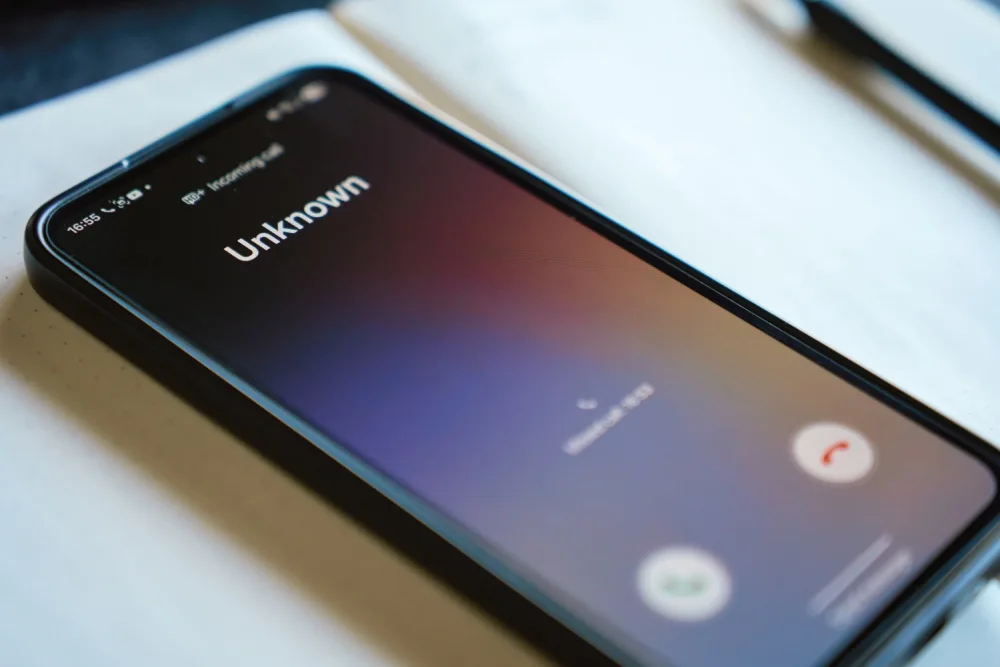
For most of the history of mobile phones, answering a call has been a gamble. A ringing screen offers a number, perhaps a name, and a few seconds to decide. A growing set of features on modern smartphones changes that exchange. Instead of ringing straight away, the phone can answer on the owner’s behalf, ask the caller who they are and why they are calling, and show the reply on screen before the owner decides whether to pick up. The feature is often grouped under the label of AI call screening, and it is quietly changing how businesses think about outbound calls.
How the major platforms handle it
A guide from WhistleOut to AI call screening on iPhone, Pixel and Samsung phones describes three versions of the idea.
On iPhone, running iOS 26 or newer, the feature is called Screen Unknown Callers, with an option labelled “Ask Reason for Calling.” The guide says the phone answers unknown numbers silently, asks for the caller’s name and reason, and rings only after the caller responds, with the answer appearing on screen. It is enabled through the Phone settings.
On Google Pixel phones, a feature called Call Screen has been available since the Pixel 3. Users can choose which caller types are screened automatically, including suspected spam, first-time callers or private numbers. According to the guide, the caller hears that a Google screening service is in use, the process runs on the phone, and transcripts are stored on the device in the call history and not in a Google account.
Samsung offers its own AI call screening on the Galaxy S26 series and, through One UI 8.5, on some older Galaxy models. The phone plays a greeting, asks who is calling and why, and shows a live transcript, and a text option lets the assistant speak for the user. An automatic mode screens suspected spam and unknown numbers. The guide notes that some Android phones lack call screening entirely.
What call screening does and does not do
It would be easy to assume that screening solves the spam problem. The call-analytics company Hiya has been explicit that it does not. In its analysis of Apple’s iOS 26 feature, published in September 2025, Hiya writes that “Call Screening is not spam protection.” The feature applies to calls from numbers not saved in a user’s contacts, adds information for the recipient and leaves the decision with them. It does not block, detect or label spam or scam calls. Users must also turn it on manually after updating.
The same analysis lists consequences for legitimate businesses. Consumers may answer fewer calls, and Apple may count a screening exchange as an “answer” even when the user never picks up, which could inflate or blur answer-rate data. Branded calls do not bypass screening, although the brand name, logo and reason for the call still appear during screening and in call history. Hiya adds that it is too early to know how the feature will change consumer behaviour or call analytics. Calls from numbers saved in a user’s contacts bypass screening altogether.
WhistleOut’s guide points out the other side of the trade-off for recipients. Legitimate callers such as pharmacies, doctors’ offices, delivery drivers and schools may hang up before the automated screening finishes, so a person can miss calls they want. Its suggested workarounds are to save numbers a person expects to hear from and to check screened calls once a day.
Practical adjustments for businesses
Hiya’s recommendations for businesses are straightforward, and they apply to any organisation that makes outbound calls:
- Train staff to state the company name and purpose clearly when a screening prompt asks for it.
- Confirm that automated or IVR systems can handle the screening prompt instead of treating it as silence.
- Ask customers to save the business number in their contacts, since saved numbers bypass screening.
A few other steps follow naturally. Sending a text or email before an appointment call, naming the number that will be used, gives customers a reason to expect it. Leaving a short voicemail with the company name, the reason and a call-back number helps recipients who check screened calls later.
What recipients can do after a screened call
For the person receiving calls, screening adds a layer of information, but the final decision remains the same. After reading a transcript or a voicemail, many people still want to know more about the number. It can help to follow some simple rules:
- Treat any request for a password, one-time code or payment as a reason to end the exchange, however polished the spoken reply sounded.
- Remember that automated screening can be answered by automated callers. A clear-sounding reply is not proof of identity.
- Return a call using a number found independently, and not the number that called.
- Save the numbers of schools, pharmacies and clinics, so they ring through.
Adding context with a reverse lookup
When a screened call leaves a name and reason that cannot be checked, a quick lookup can add to the picture. A reverse lookup tool such as Searqle offers a free phone number search which, according to the company, returns the likely owner’s name, spam and scam scores, location and carrier details, across more than 190 countries. A person who has read a transcript from an unfamiliar caller claiming to be from a bank or a delivery company could look at the number and see whether it is associated with the name given, or whether it has been flagged.
The limitations apply in full. Because the screening feature and the lookup work on different information, they can disagree, and neither is a guarantee. A caller might give a believable name while using a number that has no history, and a number with no flags is not proof of good intent. Spoofed numbers belong to other people, so a result can describe the genuine owner and not the caller. Results vary by country and can be out of date. Searqle states that it is not a consumer reporting agency, so its results should not be used for decisions about credit, housing or employment. The company offers an opt-out page for people who do not want their information shown, and the person searched is not notified. For these reasons, the lookup is best used to decide whether to call back or block, not to confront a caller.
Why this matters beyond one feature
The spread of call screening reflects a shift in the relationship between callers and recipients. Where a ringing phone once created an obligation to respond, recipients now have tools that put the burden of explanation on the caller. For legitimate organisations, that means clearer introductions, more consistent numbers and less reliance on the assumption that a call will be answered. For recipients, it means more control, along with a small risk of missing a call that mattered.
The technology is also still young, and Hiya has been open about the uncertainty. Businesses and consumers will learn how it works in practice over the coming seasons. The sensible approach for both sides is the same: be clear about who is calling and why, verify what matters through a channel you control, and treat any single tool, whether a screening prompt or a lookup, as one input and not the final word.





Show Comments