


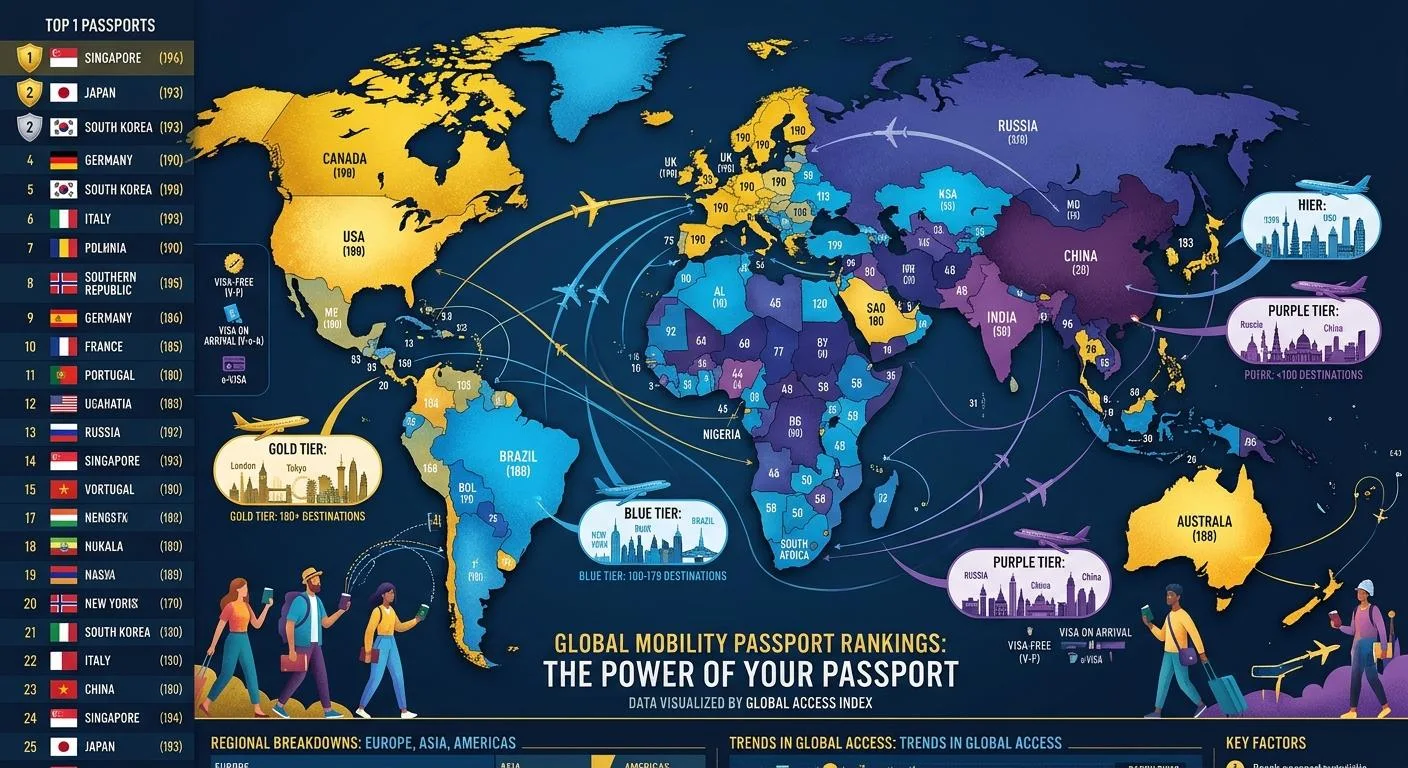
Destination totals can group different entry arrangements together, leaving travelers to verify advance approvals, permitted activities and stay limits.
WASHINGTON, DC, October 28, 2026 – American passport holders continue to enjoy extensive international mobility, but widely published passport rankings can obscure important differences between visa-free admission, visas issued upon arrival, electronic travel authorizations, and government-approved visas that must be obtained before departure.
Although international mobility indexes often summarize travel privileges with a single destination total, their calculations can combine immigration arrangements with different application procedures, financial obligations, documentary requirements, processing times, and restrictions on permitted activities.
For United States citizens planning international vacations, business visits, extended stays, or relocation, understanding these distinctions has become increasingly important as governments expand digital authorization systems and modify entry requirements previously associated with traditional visa exemptions.
The distinction between the number of destinations accessible and the practical conditions governing admission matters because a high passport ranking does not grant unrestricted entry privileges or guarantee travelers can board international transportation without additional documentation.
The American Passport Remains Widely Accepted Internationally
The United States passport continues to provide substantial access to international destinations, reflecting longstanding diplomatic relationships, reciprocal travel arrangements, and immigration policies that allow American citizens to visit temporarily without conventional consular visa applications.
The Henley Passport Index currently places the United States passport tenth, with access to 180 destinations under its methodology, although this total includes several forms of facilitated entry rather than exclusively unconditional visa-free admission.
The index evaluates 199 passports against 227 destinations and uses information from the International Air Transport Association, supplemented by research examining visa policies, government requirements, and changes affecting international travel.
However, its destination totals should be understood as comparative mobility indicators rather than comprehensive immigration instructions, because the underlying calculations do not describe every administrative obligation associated with entering a particular country.
Passport Rankings Depend on Different Calculation Methods
International passport rankings aren’t necessarily interchangeable because publishers use different definitions, scoring methods, and eligibility assumptions to determine how many countries a particular nationality can access with relative ease.
The Henley Passport Index generally credits destinations accessible without conventional advance visas, including qualifying visa-on-arrival arrangements and electronic travel authorizations, but excludes electronic visas that require government approval before departure.
By comparison, the Passport Index mobility score includes visa-free destinations, arrival visas, electronic travel authorizations, and certain electronic visas issued within three days, which can produce a different total for the same nationality.
These methodological differences explain why American travelers may see different destination counts across publications, even when underlying immigration agreements and passport privileges have not materially changed during the comparison period.
Consequently, a numerical difference between two rankings does not automatically establish that one source contains incorrect information, since the discrepancy may reflect different definitions of facilitated international access.
Visa-Free Admission Does Not Always Mean No Paperwork
Traditional visa-free travel generally permits citizens of designated countries to visit another jurisdiction temporarily without obtaining a conventional visa, provided they satisfy the destination government’s entry conditions and any applicable documentary requirements.
However, travelers may still need to complete electronic arrival declarations, show proof of onward travel, demonstrate sufficient funds, or meet health requirements before immigration authorities permit entry.
Some governments also require passports to be valid several months beyond the intended visit, which can prevent travel even when an American passport remains technically valid on the scheduled departure date.
The practical meaning of visa-free access therefore depends on the destination’s rules, so it’s essential to distinguish visa-free exemption from conventional visa processing and the broader conditions governing international admission.
Electronic Travel Authorizations Add Another Requirement
Electronic travel authorizations let governments screen eligible visa-exempt visitors before departure, creating mandatory digital application procedures that apply even when travelers do not need a traditional visitor visa.
The United Kingdom provides a prominent example: most American short-term visitors must obtain an Electronic Travel Authorization before departure unless they have another recognized immigration permission or qualify for a specific exemption.
New Zealand similarly requires many American visitors traveling under its visa-waiver arrangements to obtain an electronic travel authorization, although the authorization operates within a distinct immigration framework established by New Zealand legislation.
These systems can preserve favorable passport rankings while adding administrative obligations, showing why an index classification of visa-free access does not necessarily mean an American traveler can depart without advance approval.
Electronic Visas Represent a Different Immigration Category
Electronic visas differ from ordinary visa-free travel authorizations because they constitute immigration visas issued through digital application procedures, frequently involving documentary review and government approval before the traveler begins the journey.
India operates an electronic visa program covering qualifying tourism, business, medical treatment, and other purposes, allowing eligible Americans to apply online while requiring compliance with the conditions attached to the particular visa category.
Brazil also requires American citizens traveling for covered tourism and business activities to obtain electronic visitor visas, following the reinstatement of visa requirements that became effective on April 10, 2025.
These destinations illustrate how electronic processing can simplify the administrative experience without eliminating the underlying visa requirement, making official legal terminology more important than whether an application can be completed using a smartphone or computer.
Visas on Arrival Still Involve Immigration Conditions
Visa-on-arrival arrangements let eligible travelers obtain the necessary immigration permission upon arrival at an authorized entry point, allowing departure without the advance approval required under traditional consular visa systems.
Although passport indexes may classify such destinations alongside visa-free countries, travelers may still face government fees, application forms, passport validity checks, and restrictions on the purpose and duration of their visits.
Some arrival visa arrangements apply only at designated airports or border checkpoints, so travelers should consider the route when planning journeys involving land crossings, regional connections, or maritime transportation.
American travelers should therefore verify that the relevant arrival visa remains available for their nationality and intended purpose, especially when the journey involves entry points with different administrative procedures.
Travel Purpose Can Override Ordinary Passport Privileges
Passport rankings generally focus on temporary visitor access rather than the full range of activities foreign nationals might undertake, so they are unsuitable substitutes for determining employment, education, residence, or specialized business authorization requirements.
A country that lets American tourists enter without conventional visas may still require separate immigration approval if those visitors intend to work for pay, start businesses, enroll in long-term academic programs, or reside permanently.
Even business travel can distinguish between attending meetings and performing services locally, because national immigration laws often regulate these activities through separate classifications with different documentary requirements.
Travelers should therefore check whether their proposed activities qualify under the relevant visitor exemption rather than assuming a destination’s favorable ranking grants permission for every professional or personal objective.
Length of Stay Matters More Than Ranking Position
A passport ranking does not determine how long its holder can stay in a destination, because permitted stays depend on immigration legislation, bilateral arrangements, admission decisions, and the specific permission granted.
American citizens visiting the Schengen Area under ordinary short-stay arrangements generally remain subject to a 90-day limit within any rolling 180-day period, regardless of how many participating European countries they visit.
Other destinations allow different periods, sometimes permitting extensions through immigration authorities while imposing additional restrictions on repeat visits or cumulative time spent in the country during a given period.
Travelers planning extended vacations or frequent international business trips should calculate permitted stays independently, especially when repeated border crossings create the mistaken impression that each departure automatically resets immigration limits.
Europe Demonstrates the Growing Complexity of Travel Access
European countries illustrate how conventional visa exemptions can coexist with electronic border management, as the Entry/Exit System now records relevant movements and biometric information for qualifying non-European travelers crossing participating external borders.
The system became fully operational on April 10, 2026, replacing routine passport stamping for covered travelers with electronic records intended to support identity verification and monitoring of applicable short-stay immigration requirements.
Meanwhile, the European Travel Information and Authorization System remains scheduled for introduction, with eligible American visitors expected to obtain advance electronic permission once the system becomes operational and relevant obligations apply.
As of October 13, 2026, ETIAS is not yet accepting applications, demonstrating why travelers should distinguish implemented immigration requirements from anticipated changes announced through government planning schedules.
Admission Remains Subject to Border Authorities
A valid United States passport and any required visa or electronic authorization do not create an unconditional right to enter another country, since immigration officers retain the authority to assess applicable admission requirements.
Border authorities may examine the purpose of travel, accommodation arrangements, available financial resources, previous immigration compliance, and other circumstances considered relevant under the destination government’s legislation.
Travelers can therefore be refused admission even if their documents appear sufficient under a general passport ranking, especially when proposed activities conflict with visitor conditions or individual inadmissibility grounds apply.
This distinction reinforces the importance of treating passport rankings as comparative information rather than government authorization, because actual immigration eligibility depends on each traveler’s circumstances and proposed journey.
Airlines Enforce Documentation Requirements Before Departure
International airlines support immigration compliance by reviewing passenger documents and verifying applicable visa or authorization requirements before accepting travelers for flights to foreign destinations.
Transportation providers may rely on government verification systems, electronic authorization records, and travel-document databases to determine whether passengers possess the permissions required for their intended routes.
An American traveler who overlooks an electronic authorization requirement may consequently be prevented from boarding despite holding a passport associated with extensive international access and favorable mobility rankings.
The disruption can mean missed flights, lost accommodation, and extra transportation costs, showing why travelers should confirm entry requirements before buying nonrefundable tickets or booking complex international itineraries.
Passport Validity Requirements Create Additional Obstacles
Many countries require passports to remain valid beyond the intended arrival or departure date, creating documentary conditions that can prevent otherwise eligible travelers from completing international journeys.
Some destinations require about six months of remaining validity, while others require shorter periods or calculate the requirement based on the anticipated end of the visitor’s authorized stay.
These distinctions rarely show up in headline passport rankings, even though they can determine whether an airline accepts a passenger or whether immigration authorities consider the document sufficient.
American citizens approaching passport expiration should review destination-specific validity rules and consider renewing before departure, especially when planning travel through several jurisdictions with different documentary standards.
Previous Immigration Problems Can Affect Individual Eligibility
Passport rankings generally assume an ordinary traveler who meets basic entry conditions, so their destination totals do not account for individual circumstances such as previous immigration violations, criminal convictions, or other potential admissibility restrictions.
Foreign governments apply different legal standards when evaluating these circumstances, with some requiring specific disclosures during visa applications and others assessing relevant information through authorized immigration screening procedures.
A visa exemption available to American citizens generally does not eliminate individualized admissibility requirements, nor does an approved electronic authorization necessarily resolve every issue that might arise during border inspection.
Travelers facing potentially significant legal or immigration complications should obtain qualified advice before departure rather than relying on general passport rankings to determine whether entry will be permitted.
Second Citizenship Can Expand Certain Travel Options
American citizens who lawfully hold additional nationality may enjoy different entry arrangements depending on the passport they use, potentially giving them access to destinations that require advance visas for United States passport holders.
However, the practical advantages depend on the specific citizenship, because different passports may offer overlapping access while providing distinct privileges for residence, employment, regional travel, or family reunification.
A second citizenship also creates responsibilities around nationality recognition and document compliance, particularly when countries require their own citizens to enter using national passports or impose additional legal obligations.
Professional international mobility advisers, including Amicus International Consulting, emphasize evaluating lawful citizenship options alongside immigration requirements, personal circumstances, and the practical restrictions governing international travel.
Mobility Scores Do Not Measure Every Citizenship Benefit
Passport rankings usually focus on access to short-term international destinations, leaving broader citizenship considerations out of their main calculations despite their importance to people pursuing relocation or long-term international mobility.
These considerations can include residence rights, employment eligibility, family immigration arrangements, consular assistance, political rights, inheritance rules, and the legal responsibilities associated with nationality under different jurisdictions.
A passport with fewer short-term destinations may still offer meaningful residence or employment rights within a regional agreement, showing why destination totals cannot capture every legal benefit of citizenship.
Individuals considering additional nationality should therefore evaluate the actual rights and obligations involved rather than treating a passport’s position in an international ranking as a complete measure of its practical usefulness.
Government Sources Remain Essential for Travel Planning
The United States government advises citizens traveling internationally to examine country-specific information concerning visas, passport requirements, entry and exit regulations, and other conditions that may affect their journeys.
Through the U.S. Department of State’s international travel guidance, Americans can review destination information, identify relevant requirements, and confirm key details with the receiving country’s immigration authorities or diplomatic representatives.
Travelers should also examine official airline and transit requirements, particularly when itineraries include connecting countries where separate immigration permissions or documentation rules may apply.
Because immigration policies change over time, information from a previous visit should not automatically be treated as current, especially when governments have introduced electronic screening systems or revised bilateral visa arrangements.
Accurate Travel Planning Requires More Than a Destination Total
The continued popularity of passport rankings reflects understandable interest in international mobility, but their numerical simplicity can hide the administrative and legal differences involved in visiting individual destinations.
For American citizens, practical travel access depends on whether advance approval is required, how to obtain it, what activities are authorized, and how long immigration authorities allow visitors to stay.
A useful assessment should also consider application expenses, passport validity, transit obligations, personal admissibility, and the possibility that government requirements may change between booking and departure.
These factors matter most for travelers organizing international business activities, extended family visits, repeated journeys, or relocation plans involving multiple countries and distinct immigration frameworks.
The United States Passport Remains Valuable but Not Unrestricted
The American passport still offers extensive international travel opportunities, supported by longstanding visa exemptions and streamlined entry arrangements that reduce the administrative burden of visiting many foreign destinations.
Nevertheless, passport rankings should be understood as comparative indicators rather than comprehensive statements of immigration rights, because their calculations combine distinct permission categories and generally assume travelers satisfy relevant admission conditions.
As governments expand electronic authorizations, biometric border processing, and individualized immigration screening, successful international mobility increasingly depends on current official information rather than a passport’s published ranking alone.
Ultimately, American travelers benefit most from understanding the practical conditions behind each destination total, ensuring that every journey complies with the visas, electronic permissions, documentary standards, and immigration restrictions established by the receiving government.







Show Comments