


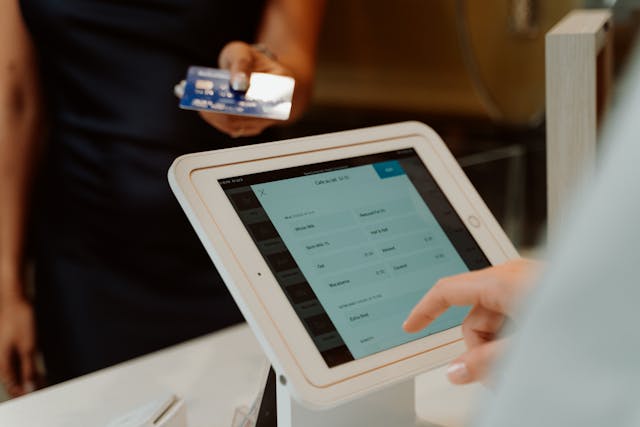
A lot of business owners tend to underestimate transaction costs, but they have a significant impact on their profitability. Let’s say you’re handling 10 million transactions per month, and each of those transactions costs around $100, and if there is a 2% processing fee every time you have the transaction, then that means you’re ending up paying $20 million just in fees.
But what if there was a way that you could have prevented this? Well, this is where smart payment routing comes into play. It can reduce the costs by up to 30%, unlocking $6M in annual savings, and this also happens without any form of latency or reliability trade-offs.
What Fees are Involved in Payment Processing?
But first, we need to understand what the types of fees are that are involved in payment processing.
| Fee Type | What It Really Means |
| Gateway Fees | This is what you pay the payment provider to process transactions, and small percentage differences can turn into huge cost gaps at scale. |
| Acquirer Fees | This is the markup your PSP adds for acquiring services, and it’s often negotiable if you have volume or multiple providers. |
| Scheme (Network) Fees | These are fixed fees charged by card networks like Visa and Mastercard, and they don’t vary much between providers. |
| Interchange Fees | This is the biggest cost component, paid to the issuing bank, and it changes based on card type, region, and how the transaction is processed. |
| Currency Conversion Fees | When you process cross-border payments, providers often add a forex markup, which can quietly eat into margins. |
| Refund Fees | Every time you refund a customer, you usually pay a small fixed fee — and that adds up quickly at scale. |
| Chargeback Fees | When customers dispute a payment, you pay a penalty fee, even if you win the dispute. |
Ways to Lower Your Payment Processing Costs
Now that you have an idea about the type of costs that are associated with transactions in a business, let’s dive deeper into the ways that can help lower your payment processing costs by a great margin.
1. Work with multiple payment service providers (PSPs)
When you use more than one payment service provider, it gives you flexibility, cost savings, and stronger negotiating power. Instead of sending all your transactions through a single provider, you can route each payment to a PSP that offers the best pricing and performance for that specific transaction.
2. Use Intelligent Payment routing
Intelligent payment routing finds the optimal way to process a payment so that as many transactions as possible get through and costs are kept to a minimum. This could mean routing through several payment providers (payment orchestration) or networks, taking into account things like cost, reliability, and efficiency. Merchants can define rules for automatic routing based on what they want to achieve.
3. Network Tokenisation
Unlike regular gateway tokens, network tokens are issued directly by the card network and, considering they come from the card brands themselves, the entire payment chain recognises them as more secure and trusted, which reduces the interchange costs and, considering the network tokenisation has significantly improved the security aspect, fraud and chargeback costs decrease significantly, also this happens automatically, which is again one of the biggest hidden costs in payments, and, lastly, it makes the PCI compliance simpler and cheaper, considering tokens replace sensitive card numbers, merchants handle less data and, which reduces audit complexity, so overall network tokenisation is the best way to reduce your transaction costs.
4. Data Optimisation
Sending better Level 2 and 3 information (such as tax amount, invoice number, and line items) with B2B card payments is what data optimisation entails. This is how you can get reduced interchange rates. Giving issuers more information lowers their risk, stops expensive downgrades, and can drop costs by 0.20–0.50%, which adds up to big savings.
Key Benefits of Smart Routing
Now that you have an understanding of how you can reduce the costs of transactions through smart payment routing, let’s also understand some other benefits you get through smart routing.
| Capability | What It Means |
| Enhanced Performance Analysis | Real-time data helps you see how your payments are performing and quickly spot areas that need improvement. |
| Dynamic Routing | You can set smart rules (like BIN-based routing) to send each payment through the most efficient and reliable channel. |
| Real-Time Reporting | You get live insights into trends — like which gateways are failing more — so you can optimise continuously. |
| Easier Integrations | One integration gives you access to multiple local and global PSPs, making expansion much simpler. |
| Wider Choice of Payment Methods | Adding options like BNPL or digital wallets becomes easier because the smart router handles the heavy lifting. |
| Increased Acceptance Rates | Automatically retrying failed payments improves the chances of successful transactions. |
Conclusion
Transaction costs are not just operational noise. They directly impact margins. At scale, even small percentage differences mean millions. Smart payment routing changes the equation.
It aligns cost, performance, and approval rates in real time. By combining multi-PSP setups, intelligent routing, tokenisation, and data optimisation, merchants gain control over their payment economics. This is not just about lowering fees. It is about building an efficient, scalable payment infrastructure.
In a competitive digital economy, the merchants who optimise payments win on both revenue and margin.






Show Comments