

Estimates reveal massive exploitation of the Paycheck Protection Program as federal investigators work to unravel billions in stolen government funds.
WASHINGTON, DC
The Paycheck Protection Program was designed as an emergency bridge for small businesses suddenly facing collapse during the first chaotic months of the COVID-19 pandemic. Instead, it also became one of the most heavily exploited government relief programs in American history, with investigators and watchdogs now pointing to roughly $64 billion in potentially fraudulent PPP disbursements and a much broader pandemic fraud landscape that reached well beyond that already staggering total.
What began in spring 2020 as a lifeline for payrolls quickly turned into a pay-and-chase system that moved money out the door faster than many controls could keep up. That speed was politically understandable at the height of the crisis, but it also created the exact conditions that fraudsters, shell operators, organized conspirators, and opportunistic insiders needed. By the time stronger filters, pattern analysis, and interagency coordination improved, billions had already been approved, disbursed, spent, moved, laundered, or hidden behind fake payrolls, invented companies, altered tax forms, and borrowed identities.
The scale alone explains why the PPP story still matters in 2026. It is not simply a retrospective scandal about pandemic excess. It is a live test of whether the United States can recover stolen relief money, prosecute complex fraud at national scale, and learn anything meaningful before the next emergency funding wave arrives. For prosecutors, inspectors general, banks, and compliance professionals, PPP fraud now stands as a warning about what happens when public urgency outruns institutional verification.
The number that changed the conversation
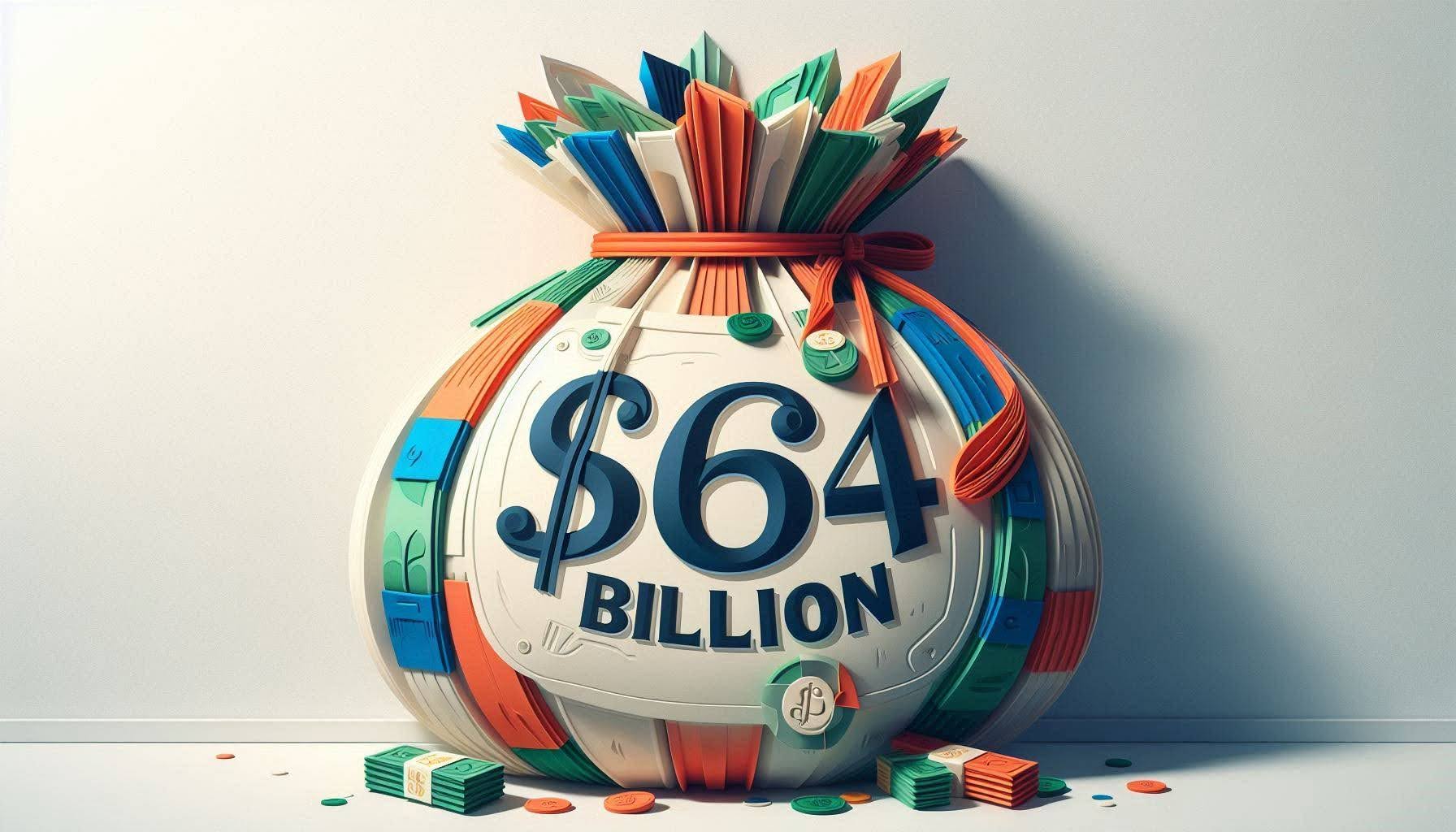
For years, pandemic fraud was discussed in fragments, one arrest or one indictment at a time. The full scale became harder to ignore after the SBA watchdog report concluded that potentially fraudulent disbursements in the Paycheck Protection Program alone reached about $64 billion. That estimate did not mean every suspicious loan had already been criminally proven. It meant the federal government’s own fraud investigators believed the scope of suspect disbursements was vast enough to rank among the biggest financial thefts ever inflicted on a federal emergency program.
The size of that estimate also shifted the public framing. PPP fraud was no longer a story about scattered abuse by a few celebrities, local grifters, or loosely organized claimants. It became a story about systemic vulnerability. The emergency design of the program, the pressure to move quickly, the dependence on lenders with varying controls, and the limited time for cross-checking applications against payroll data or corporate reality created a landscape where fraud was not merely possible but structurally incentivized.
That reality is one reason the issue still commands attention long after the worst months of the pandemic passed. A theft in the tens of billions is not just an embarrassing footnote. It changes how people think about public trust, government competence, and the real cost of emergency relief delivered without sufficiently hardened verification.
A program built for speed, then exploited at scale
The original political logic behind PPP was simple. Businesses needed payroll support immediately. Workers needed employers to keep them on the books. Congress and federal agencies were under enormous pressure to keep the economy from collapsing further. That urgency made speed the central design feature.
But speed came with a trade off. Many applications were processed through systems that had not been built for this volume, this pressure, or this kind of coordinated fraud. Lenders had incentives to push applications through quickly. Applicants knew funds were limited and deadlines were politically charged. Fraudsters understood that overwhelmed programs often depend on self-reported information that may not be thoroughly verified before money is released.
That created a perfect opening. Fake businesses appeared. Dormant businesses suddenly inflated payrolls. Real businesses embellished employee counts or payroll records. Organized actors moved through identity theft, synthetic records, shell companies, and template-based application tactics that could be repeated at scale. In some schemes, participants layered false tax forms, bogus payroll processors, stolen Social Security numbers, and sham employee rosters to make applications look ordinary enough to pass in a rush environment.
Once money landed, the trail often widened rather than ended. Investigators later traced PPP proceeds into luxury spending, real estate, vehicles, investment transfers, personal debt payments, business expansions unrelated to payroll preservation, and in some cases more elaborate laundering chains. What had been sold to the public as emergency stabilization money often became instant liquidity for people who were never entitled to it.
The fraud was not isolated. It was industrial
One reason PPP theft became so consequential is that it did not remain at the level of one-off opportunists. In many districts, prosecutors described coordinated schemes with multiple defendants, repeated applications, layered falsehoods, and deliberate efforts to use professional-looking paperwork to overwhelm skepticism.
That is where the difference between random abuse and industrial fraud becomes important. Industrial fraud is scalable. It can be repeated across lenders, states, identities, and shell entities. It can recruit accountants, insiders, facilitators, or sham consultants. It can imitate legitimate business paperwork well enough to survive a fast review environment. That kind of fraud is exactly what turns a relief program into a national theft machine.
The GAO review reinforced that bigger picture by repeating the now widely cited estimate of $64 billion in potentially fraudulent PPP disbursements while also showing how pandemic relief fraud reached across multiple programs, not just one. PPP may have become the most memorable symbol of the theft because it was tied directly to the public promise of keeping workers employed, but it was part of a broader failure in emergency controls.
That broader context matters. It helps explain why even large individual cases, including multimillion-dollar lender-service and business-fraud schemes charged by DOJ in 2025 and 2026, are not merely outliers. They are windows into a much larger pattern of abuse that federal agencies are still mapping years later.
Why recovery is harder than outrage
Public anger tends to spike when individual cases feature luxury purchases, fake businesses, or defendants with obvious access to money and professional advice. But outrage does not automatically translate into recovery. Recovering stolen PPP funds is much harder than identifying that fraud occurred.
First, money moves quickly. Fraud proceeds can be spent, layered, hidden, gifted, transferred, or blended into other accounts before investigators catch up. Second, proving fraud at criminal standards takes time. Third, not every suspicious loan becomes a clean criminal case with an easy documentary trail. Some involve inflated claims rather than invented companies. Some involve partial eligibility mixed with false numbers. Some move through intermediaries, facilitators, or lender-side actors whose roles are more complicated than a headline suggests.
That is why even the most aggressive prosecution strategy cannot instantly reverse the losses. The DOJ’s 2024 task force report showed the federal government had charged thousands of defendants and seized or forfeited more than $1.4 billion in COVID-relief fraud matters, but that still represented only a fraction of the total suspected theft. The gap between estimated fraud and recovered money is precisely what makes PPP such a durable scandal.
It is also why the term heist resonates. The money did not simply leak. It was taken on a scale large enough that even energetic enforcement can look small beside the original outflow.
The political lesson is uncomfortable
No serious reading of the PPP record allows for a simple partisan story. The program was launched during a genuine emergency. Businesses were genuinely in crisis. The pressure to move money fast was real. Many legitimate employers were helped. Many jobs were preserved. But the same reality that made quick relief morally and politically compelling also made abuse easier.
That creates an uncomfortable lesson for both parties and for the bureaucracy alike. A crisis can justify exceptional speed, but it does not suspend the laws of fraud, incentives, or administrative weakness. If anything, emergency conditions multiply the need for hardened controls, post-disbursement analytics, and better cross-checking between tax, identity, payroll, and business-formation data.
The hard truth is that federal agencies were being asked to solve two nearly incompatible problems at once. They had to save legitimate businesses immediately and prevent large-scale theft at the same time. In practice, the balance tilted toward speed, and fraud followed the opportunity.
That does not mean emergency aid was a mistake. It means that future emergency aid without stronger verification will invite the same result. The next crisis will arrive with every fraud lesson from PPP already publicly available. If the controls remain weak, the failure will be harder to defend.
Why this story is still unfolding in 2026
PPP fraud remains current because the investigations did not end when the pandemic emergency did. They evolved. Early enforcement focused on obvious frauds, fake businesses, and clear misuse cases. Later cases became broader, more technical, and sometimes more revealing, especially when they touched lender-service companies, professional facilitators, or networks moving high volumes of fraudulent applications.
That is why recent DOJ prosecutions still matter. They show that investigators continue to follow the money years after the program’s peak, and they suggest the full enforcement story is not finished. Large cases brought in 2025 and 2026 demonstrate that pandemic relief fraud is still producing courtroom consequences even after public attention has shifted elsewhere.
This persistence also reflects a reality prosecutors know well. Big frauds age slowly. Documents must be gathered. witnesses must be interviewed. bank records must be analyzed. defense challenges must be anticipated. and loss calculations must be supported. Cases with multiple entities, layered records, and cross-jurisdiction conduct do not resolve quickly just because the headlines moved on.
The result is that PPP fraud now occupies a strange place in American public life. It feels like old news because the pandemic is no longer the center of daily politics. Yet it remains active law-enforcement business because the money was too large, the losses too broad, and the institutional embarrassment too deep to leave alone.
The trust problem may outlast the prosecutions
The legal process can punish individual defendants. It can recover some money. It can improve deterrence at the margins. But it cannot fully repair the trust damage on its own.
For many Americans, PPP fraud became symbolic of something larger than one program. It became evidence that emergency spending can be manipulated by the fastest, the boldest, or the best connected while ordinary businesses fight paperwork and uncertainty. That perception matters whether or not every case involved sophisticated insiders. It affects how voters view future stimulus, future small-business relief, and future federal promises made under pressure.
This is one reason the scandal continues to resonate well beyond accounting circles and white-collar prosecutions. It feeds a broader skepticism about whether institutions can move quickly without becoming exploitable, and whether government can truly distinguish between urgent relief and an open invitation to theft.
At Amicus International Consulting, the broader lesson is that crisis-era money will always attract both legitimate demand and organized abuse. The businesses, banks, advisers, and investigators that emerge strongest from such periods are usually the ones that understand compliance as a frontline protection, not a postmortem exercise. Readers following wider financial-risk and due-diligence issues can also request updates or discussion through a confidential consultation channel.
Part 1 of a much larger fraud story
The PPP saga matters because it was not just a theft. It was a systems test, and the system failed on a scale large enough to reshape how pandemic relief will be remembered. Roughly $64 billion in potentially fraudulent PPP disbursements is not an ordinary scandal number. It is a historic one.
That is why this story deserves to be treated as more than a recap of bad actors and flashy indictments. It is the opening chapter in a deeper account of how fraud networks exploited relief design, how prosecutors are still trying to catch up, and how emergency policy can turn from rescue to vulnerability when speed outruns control.
In that sense, the $64 billion figure is not just a number. It is a warning. It marks the point where a program meant to preserve the economy also became one of the most expensive fraud opportunities in modern U.S. history.