


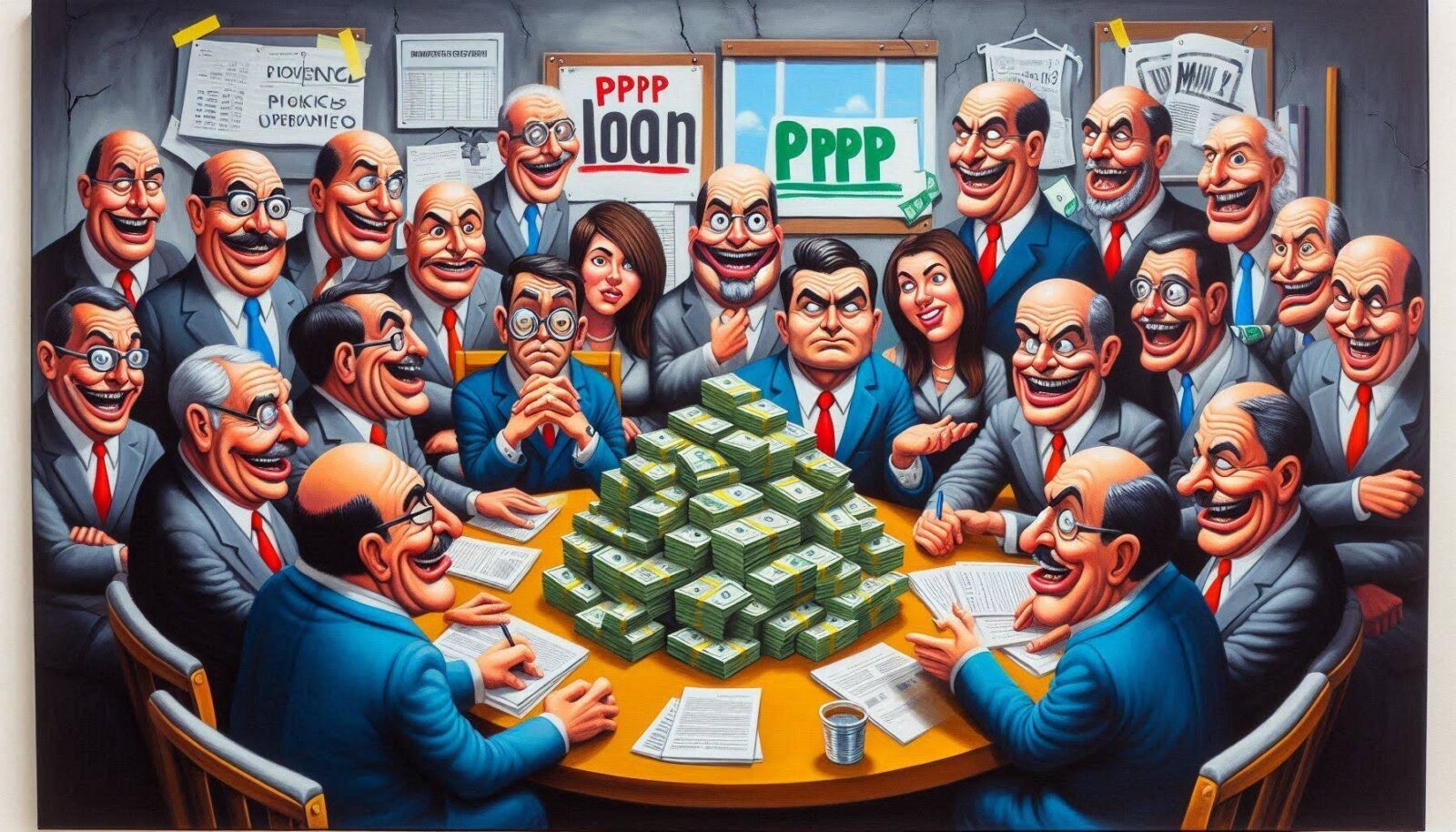
Federal authorities are leveraging the False Claims Act and an extended prosecution window to aggressively pursue pandemic relief abusers well into the next decade.
WASHINGTON, DC.
When the Paycheck Protection Program first became a fraud magnet in 2020, many offenders likely assumed the real danger would fade with time. They were wrong. One of the least appreciated realities of pandemic-relief enforcement is that the legal clock is far longer than many borrowers, facilitators, and conspirators appear to have believed. In 2022, Congress and the White House gave federal authorities a dramatically longer runway by extending the statute of limitations for PPP and COVID-19 EIDL fraud to ten years. That change transformed pandemic-loan enforcement from a short, frantic chase into a decade-long legal horizon.
The result is simple and brutal for fraud defendants. PPP abuse is not the kind of white-collar risk that necessarily burns out in a few years while records grow cold and public attention moves on. It is now a category of fraud that federal prosecutors, inspectors general, civil enforcement lawyers, and data analysts can continue pursuing well into the next decade. For borrowers who lied, facilitators who engineered false applications, or companies that used funds in ways inconsistent with their certifications, time is no longer the refuge it once looked like.
That matters because the PPP story was always larger than the loans themselves. The program moved money at crisis speed, often before full verification could catch up. That meant fraud investigations were destined to lag behind disbursement. Records had to be traced. shell entities had to be unpacked. Payroll claims had to be checked against reality. and misuse of funds had to be reconstructed after the money had already moved. A short limitations period would have favored the fraudster. A ten-year horizon changes the balance.
The ten-year window was not an accident. It was a response to the scale of the fraud.
By 2022, it had become obvious that pandemic-relief fraud was not a narrow or temporary problem. Investigators were already confronting a flood of suspicious applications, sham businesses, inflated payroll records, nominee structures, false certifications, and identity-theft-driven schemes that were too numerous and too layered to resolve quickly. Congress responded by extending the prosecution timeline through laws highlighted in the SBA’s 2022 statement on the signing of the enforcement acts. That extension reflected a practical truth. Big frauds age slowly. They do not become easy simply because the program that generated them has ended.
The extension was therefore as much an investigative tool as a political signal. It told agencies and prosecutors that they had time to keep digging. It also told defendants that delay alone would not protect them. If someone assumed they only needed to outlast early headlines, lender reviews, or the first wave of prosecutions, the legal landscape changed against them.
That is one reason PPP fraud remains an active enforcement story in 2026. The government is no longer racing a narrow clock. It is working inside a much longer one, and that alters both charging strategy and settlement leverage. Cases that once might have seemed too complex, too document-heavy, or too time-consuming now remain viable far longer.
Criminal exposure and civil exposure are not the same thing, and fraud defendants can face both.
Many people hear “statute of limitations” and imagine a single countdown. In PPP matters, the reality can be more dangerous. Criminal prosecutors may pursue fraud, wire fraud, bank fraud, false statement, or related theories tied to the extended enforcement window for PPP and COVID-19 EIDL fraud. At the same time, the government can also look at civil recovery tools, most importantly the False Claims Act, which remains one of the Justice Department’s most powerful weapons against false claims for federal money.
That distinction matters because a borrower does not need to be criminally convicted for the government to pursue civil consequences. The False Claims Act is designed to recover public money obtained through false or fraudulent claims and can impose treble damages and penalties. In other words, even where a criminal case is not the chosen path, the government may still have a serious civil one.
The legal architecture, therefore, works on two levels. Criminal enforcement threatens liberty. Civil enforcement threatens money, settlements, judgments, and long-term financial pain. Put together, they create a far more dangerous environment for PPP fraud defendants than many initially understood. The question is no longer merely whether a person will be prosecuted criminally. It is whether the government will still have one or more viable paths to pursue accountability when the records are finally assembled.
Why the False Claims Act matters so much in PPP cases
The False Claims Act is especially important because PPP applications and forgiveness requests were filled with certifications. Applicants represented that the business existed, that payroll numbers were real, that eligibility requirements were satisfied, and later that the loan proceeds had been used consistently with program rules. Those certifications were not decorative. They were the legal bridge between a borrower and taxpayer money.
If those certifications were knowingly false, the government can frame the matter not only as general fraud but as a false claim for payment or approval. That is where the civil side becomes powerful. A defendant may think of PPP abuse as an old loan problem. The government may see it as a false-claims problem with continuing civil consequences.
That matters even more because civil fraud cases can be strategically attractive to the government. They can sometimes move when criminal-proof burdens or resource choices make prosecutors more selective. They also create enormous pressure because the math changes quickly when damages, penalties, and litigation costs begin to accumulate. A borrower who once viewed the illicit PPP funds as a windfall may discover years later that the legal exposure attached to those funds is far more expensive than the original amount ever was.
The civil path also helps explain why time is such a poor defense. Fraud defendants often assume that once the funds are spent, the records scattered, and the pandemic politically “over,” the practical risk drops. But false-claims enforcement is built for long-tail accountability. It rewards document reconstruction, institutional memory, and government persistence.
Fraud investigations needed time because the schemes were layered.
One reason the ten-year extension was so consequential is that PPP fraud was rarely as simple as one false application and one quick arrest. Many cases involved shell companies, inflated payrolls, fake tax records, identity theft, nominee owners, multiple applications, and misuse of funds across several institutions or jurisdictions. Some defendants allegedly treated PPP as a platform rather than a single event. One business became three. One application became several. One fake payroll became the basis for an entire cluster of claims.
Those kinds of cases do not resolve quickly. Banks need to produce records. agencies need to compare filings. investigators need to determine whether a business actually existed, whether employees were real, whether supporting forms were ever filed, and whether proceeds moved into luxury spending, property, or laundering channels. In large cases, the hardest work often begins after the money is already gone.
This is why the longer statute was essential from the government’s perspective. Without it, the complexity of the fraud would have favored the people who committed it. The more layers in the scheme, the greater the chance that a shorter legal window would run out before the full case could be assembled. Congress effectively decided that pandemic-loan fraud was too large and too document-heavy to let the calendar become a shield.
The extension changes defendant psychology as much as prosecutorial strategy.
The ten-year horizon does something important beyond giving prosecutors time. It also changes how defendants have to think. A person who falsely obtained PPP money in 2020 or 2021 cannot simply assume that because no indictment arrived in the first two or three years, danger has passed. That assumption is now deeply unsafe.
In practical terms, the extension means that old applications remain alive as future legal problems. Records that seemed buried may still be reconstructed. Misuse of funds that once felt too old to matter may still appear in a complaint, indictment, forfeiture action, or FCA settlement demand. Facilitators who thought they were insulated because they were one step removed from the borrower may also find themselves revisited if investigators keep pulling on the transaction chain.
That long horizon also gives leverage to cooperators, whistleblowers, and document-driven investigations. Time can produce new witnesses, better analytics, and cleaner comparisons across large batches of applications. It can also make defense narratives harder to sustain when banks, payroll processors, tax filings, and digital records are finally laid side by side.
Loan forgiveness did not erase liability if the underlying claims were false.
Another dangerous misunderstanding among PPP abusers is the idea that forgiveness somehow sanitized the original lie. It did not. If a borrower obtained a PPP loan through false statements or later secured forgiveness through false certifications about how the money was used, forgiveness can deepen rather than eliminate the legal problem. It is not a shield. It can become another false claim.
This matters because some borrowers likely interpreted forgiveness as closure. They assumed that once the government forgave the loan, the matter was over. In legal reality, forgiveness may simply mark another point at which the borrower reaffirmed statements to the government. If those statements were false, the paper trail becomes richer, not safer.
That is one reason the civil-fraud pathway is so important. The government may contend that it was induced to approve a loan, and later to forgive it, through false claims or false records. That doubles the relevance of the paperwork and widens the significance of every certification in the file.
The government is still building cases because the fraud story is still incomplete.
PPP enforcement in 2026 should be understood not as a lingering afterthought, but as an ongoing phase of a much longer accountability cycle. Watchdogs, DOJ, SBA investigators, and civil enforcement teams are still tracing the broader pandemic-fraud landscape years after the original disbursements. The legal system moves slowly because the underlying schemes were often broad, repetitive, and disguised to look routine.
That slow pace can mislead the public. Silence is not closure. Lack of an early indictment is not vindication. Old records are not dead records when the government still has time to pursue them. That is the real legal reality for scammers. They are not outrunning the law merely because the news cycle moved on. In many cases, the most serious legal risk may come later, not sooner.
At Amicus International Consulting, the broader compliance lesson is that emergency-era fraud should never be analyzed solely at the time of disbursement. The real exposure often expands over time as agencies compare records, apply civil theories, and revisit transactions with the benefit of hindsight. Readers tracking broader themes in fraud risk, enforcement timing, and institutional vulnerability can also reach out through a confidential consultation channel.
A decade is a very long time to look over your shoulder.
That may be the simplest way to understand Part 5. A ten-year statute of limitations is not just a technical legal rule. It is a strategic message. It means pandemic-relief fraud is not a short-memory offense. It means that taxpayers, agencies, lenders, and prosecutors are not required to solve everything immediately to preserve accountability. And it means that borrowers who lied their way into PPP money cannot assume that time itself is now on their side.
The title says a decade to pay, and that is exactly the point. For many fraudsters, the cost of PPP abuse may not arrive as quickly as the money did. But the legal system has been given much more time to catch up. And in white-collar enforcement, that can be enough to change everything.