


AI music is all the rage these days. Not just because these tunes are getting millions of clicks, but also because it’s attracting more than its share of rage. Listeners who like AI music often don’t know that it’s AI generated, whereas those who hate it treat it like its very existence is an act of deception.
AI generated music is in its half-ripened infancy, so of course emotions are running high. When Bitcoin hit the scene, people flipped out. They said it wasn’t real money, that it was a flash in the pan. In the same way that Bitcoin reconfigured our ideas of currency, I believe that AI generation will revolutionize the way we hear music. Both trends make us question the idea of what’s real.

What’s all the AI music fuss about?
Most of the hubbub around AI music generation surrounds not what it is, but what it is not. Namely, it’s not human. The vocals are perfectly enunciated every time. The guitar licks are clean and notes are never missed. The AI software didn’t have to spend several years annoying its parents from the garage while banging out half-baked riffs on a cheap guitar to learn the craft. Stuff like that.
But how many of us check an artist’s resume before we give a wayward song a listen? How much of the music we hear on the radio features accomplished musicians anyway? And aren’t the vocals we hear largely synthesized? Do we really care if they’re using drum kits, synthesizers, and auto tune?
What if we like a song simply because it sounds good?

What can AI music do?
Back in high school I took a class on mechatronics. Machining, electrical, maintenance, programming, all that jazz. The teacher asked us one day to write down what you could do with a can of WD-40. It seemed like a trivial assignment. AI was for lubricating and stopping squeaks.
When we were done, he handed each of us a sheet of paper that showed about three dozen uses for this magical product brought to us by NASA, from rust prevention to windshield repair and loads of other random endeavors I can’t remember, but it was a far cry from mere squeak elimination.
As I covered last time, AI is a tool. The thing about tools: they’re limited to the ability and creativity of their users. Namely: us. Any of us can open Suno AI and ask it to write an edge pop track about skipping class and it’ll sling out a 4/4 with a clean, belting voice and lyrics that might be described as “just fine.”
In WD-40 terms, that’s small thinking. Squeak-stopping. But why stop a squeak when you can make real noise?

I decided I’d conduct another experiment. As a poet and an amateur linguist, I decided I’d undertake an exercise of my own that was meant to push the bounds of what the system could generate. Noam Chomsky once proffered the sentence, “Colorless green dreams sleep furiously,” to show that English can be pretentious without making the sloppiest lick of sense.
But… it’s a cool sounding sentence, isn’t it? It’s ripe with repeated sounds and it conjures a level of imagery that shouldn’t exist at all given its lack of substance. If Chomsky could do it with a sentence, could I do the same with an album? Could I write a series of interlocking yet absurd lyrics that could create visions and emotions without ever achieving logical coherence?
I believed I could. But I’d need music to match. And if my words were bound to be impossibly confounding, could I do the same with genres? Could I blend sounds that shouldn’t go together? Could I mix and match an EP that was pleasant, absurd, and unique in equal measure?
Jupiter sends blank correspondence
From a finicky old telegraph
Mesozoically heroic Morse code
Deciphered by colorless green stars
It doesn’t say a thing
The (human) music producer Rick Beato has been so aggrieved over AI music that he took to CBS Mornings to air his thoughts. His problem with AI music largely surrounds the idea that you can slip AI generated music into a human playlist and nobody will know the difference. He feels that the machine is now depriving the thumping hearts of their jobs.
In all fairness, he’s not wrong. AI poses a threat to the status quo. The typical hits that embody typical schemes in typical ways with forgettable or simple lyrics. But to call it a threat to music? I’d argue that it relies on a narrow definition of what music is. That, by default, narrows AI too.
In his mind, you have to ready your keen ear to pick out the music that’s fooling you by slipping unnoticed into your flock of songs. It’s not unlike a shell game. But what if we break that mold entirely? What if AI isn’t used to merely generate replicas of Top 40’s? What if it innovates?
My question: Why blend in when you can stand out?
Why not use the tool at hand to create what you want to hear, rather than what you hear already? It’ll be a long quest, but I feel like this experiment was a first step.
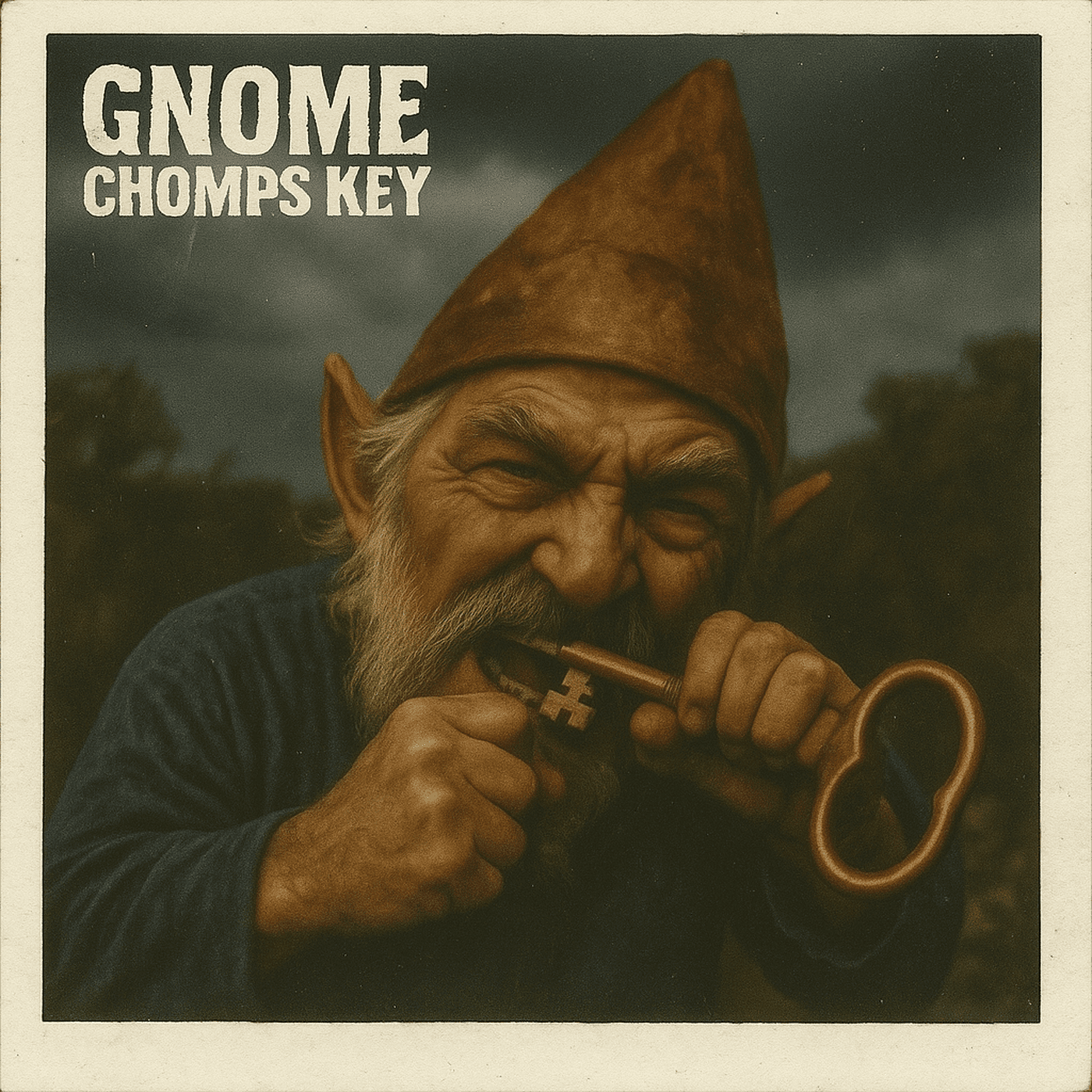
My experimental EP is called Gnome Chomps Key. It’s streaming everywhere now, and I’d be happy to know your thoughts.
<iframe width=”560″ height=”315″ src=”https://www.youtube.com/embed/2W_Vt1SN1kE?si=gerkZtRPQe0ThKTy” title=”YouTube video player” frameborder=”0″ allow=”accelerometer; autoplay; clipboard-write; encrypted-media; gyroscope; picture-in-picture; web-share” referrerpolicy=”strict-origin-when-cross-origin” allowfullscreen></iframe>