


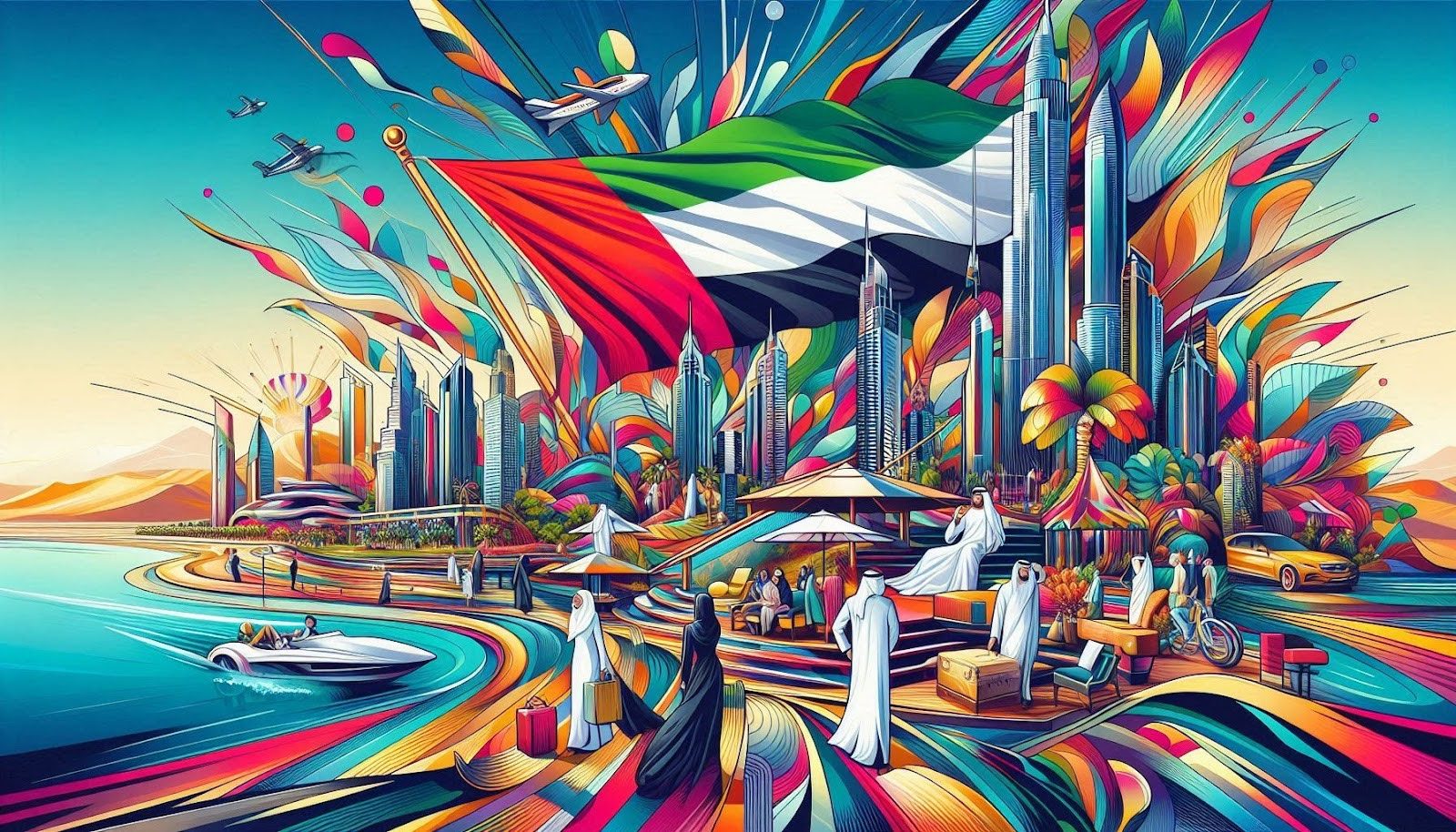
Tax-free salaries, luxury infrastructure, safety, and long-term residency programs have helped turn Dubai into a serious U.S. expat target. But the Gulf’s new security reality is changing the calculation fast.
WASHINGTON, DC.
For years, Dubai sold Americans on a simple promise. You could leave behind high taxes, political noise, urban disorder, and regulatory fatigue, then land in a city built for speed, comfort, and money. The elevators worked. The streets were clean. The airport connected you to almost everywhere. The skyline looked like the future. And for U.S. professionals, entrepreneurs, and remote earners, the pitch felt especially strong because Dubai paired luxury with relative administrative ease. That sales pitch is still alive in 2026, but it no longer looks as bulletproof as it did even a few months ago. The U.S. government is now telling Americans to reconsider travel to the United Arab Emirates, and that single fact changes the tone of the whole Dubai conversation.
Dubai remains attractive for reasons that are easy to understand. The city still offers the core bundle many Americans want most: tax-free salaries, modern housing stock, strong air links, high-end retail, visible security, English-friendly business culture, and residency pathways that feel more straightforward than the maze many Western countries now impose. Reuters reported in March that Dubai’s long-standing appeal was built on tax-free pay, ease of doing business, and the broader belief that whatever was destabilizing the Middle East somehow stopped at Dubai’s borders. That belief was always part branding and part geopolitical luck. In 2026, it is under visible strain.
The attraction is real and easy to understand.
Americans looking at Dubai in 2026 are usually chasing more than one thing at the same time. Some want cleaner tax treatment and more disposable income. Some want a city that still seems to reward ambition. Some want a place where global business networks, high-end real estate, and premium service culture are all stacked on top of each other. Others simply want out of the U.S. grind and see Dubai as a place where money moves faster, bureaucracies answer faster, and personal status can be translated into practical comfort more quickly than in New York, Los Angeles, or even London. That underlying pull remains strong, which is why Dubai is still on so many American shortlists.
Residency options also help explain the city’s grip on the American imagination. The UAE government continues to offer a long-term Golden Visa for eligible investors and professionals, while separate virtual work residence pathways still allow foreigners employed outside the UAE to live there legally. For Americans who can work remotely or structure income internationally, that matters. Dubai does not just market itself as a holiday playground. It markets itself as a place where you can actually stay, work, build a company, raise children, and plug into an international economy without feeling like a temporary outsider the entire time.
For that reason, Dubai became more than a fantasy city for the ultra-rich. It increasingly turned into a realistic option for upper-middle-class Americans, founders, consultants, digital workers, finance professionals, and families who could absorb the housing and school costs. That is what made the city’s image so powerful. It was not just luxury. It was luxury with a migration pathway. It was aspiration with paperwork attached. For some Americans also thinking beyond one residency destination, that broader search has widened into backup planning around mobility and legal relocation options, including second-passport strategies that are pitched as insurance against future political or regional instability.
But the safety pitch has cracked.
The reason Dubai now deserves a harder second look is simple: the city’s old safe-haven narrative has taken a blow. In early March, the U.S. State Department updated its advisory and shifted the UAE to Level 3, Reconsider Travel, citing the threat of armed conflict and terrorism, and noting the ordered departure of non-emergency U.S. government personnel and family members. That is not routine travel boilerplate. It is a material warning, and it lands at the exact point where Dubai once felt strongest, safety.
That change was not happening in isolation. Reuters reported in March that Dubai’s safe-haven status was being tested after Iranian strikes challenged the long-standing assumption that regional conflicts would somehow stop short of the emirate’s commercial core. In a separate Reuters report, airlines extended suspensions and cancellations affecting Dubai and other Gulf destinations, while broader fallout from the conflict disrupted aviation across the region. When business media companies and large firms begin discussing remote work, relocation options, or staff flexibility in a city that built its reputation on stability, the market gets the message quickly. As Reuters reported last month, the old narrative that Dubai was somehow insulated from the surrounding region no longer looks untouchable.
This does not mean Dubai suddenly became unlivable. It means the premium Americans thought they were paying for, safety at scale in a glamorous Gulf hub, has been partially repriced by events. That distinction matters. Plenty of expats will stay. Plenty of new arrivals will still come. But the sales language has changed. A year ago, Dubai could be marketed as a sleek escape from Western disorder with limited regional downside. In April 2026, any honest article has to say the downside is now visible, not theoretical.
The risk is not only missiles, it is disruption.
Most Americans thinking about Dubai do not just need a place that feels luxurious. They need a place that feels dependable. That means regular flight schedules, steady supply chains, institutional confidence, business continuity, and the assumption that a regional flare-up will not suddenly trap people, freeze decisions, or force emergency contingency planning. The recent Gulf crisis hit that exact nerve. Reuters reported more than 21,000 flight cancellations across major Gulf hubs during the early March fallout, while carriers extended suspensions to Dubai and neighboring destinations. For an expat city whose entire identity is built on frictionless connectivity, that kind of disruption is not a side issue. It goes straight to the heart of the brand.
That is also why the Dubai debate for Americans in 2026 is no longer just about taxes. It is about the concentration of risk. If you move your family, job, banking routines, residency status, and school calendar into one high-functioning Gulf city, then that city’s regional exposure matters more than the aesthetic brochures ever admit. A safe building is not the same thing as a safe geopolitical environment. A polished airport is not the same thing as a low-risk corridor. And a long-term residence visa is not the same thing as long-term predictability.
Americans still drawn to Dubai are usually comparing it to the wrong places.
Part of Dubai’s continuing magnetism comes from the fact that many Americans compare it to chaotic U.S. urban life rather than to other realistic relocation options. Against San Francisco’s cost structure, New York’s tax bite, or the bureaucratic drag of many European capitals, Dubai can still look brilliantly efficient. But that comparison hides the real question. The issue is not whether Dubai is more glamorous or more functional than a stressed American city. The issue is whether it is the best risk-adjusted option for an American planning a five- or ten-year move in 2026.
That answer now looks less certain.
For some people, especially highly paid professionals with regional business interests, Dubai may still make sense despite the volatility. For others, especially families whose top priority is durable security and long-run predictability, the city may no longer rank where it once did. The very reasons Americans loved Dubai, centrality, speed, access, and its role as a regional command post, are the same reasons regional instability now matters so much. In calmer years, centrality was an advantage. In a hotter Gulf, centrality can become exposure.
The smarter American question in 2026 is not “Can I move to Dubai?”
It is “Why would I choose Dubai over safer alternatives right now?”
That is the tougher question, and it deserves a tougher answer. Dubai still offers enormous upside. It still has capital, infrastructure, polished services, and residency architecture that many Western countries cannot match. But it has lost something that mattered deeply to the American expat imagination, the assumption of exceptional insulation. Once that illusion breaks, the city has to compete on a different basis. It becomes one option among many, not the default fantasy exit for every tax-weary American with a remote income stream and an appetite for luxury.
That shift does not kill the Dubai dream. It just drags it back into the real world.
And in the real world of April 2026, the city is still rich, still fast, still seductive, and still full of opportunity. But it is also sitting in a region where the security climate has changed sharply enough that Washington is warning Americans to think twice. For a place once sold as the cleanest escape hatch in the wider Middle East, that is a serious reputational wound. Americans may keep coming. Many will. But the smarter ones are now asking whether Dubai is still the best option, or simply the shiniest one.