


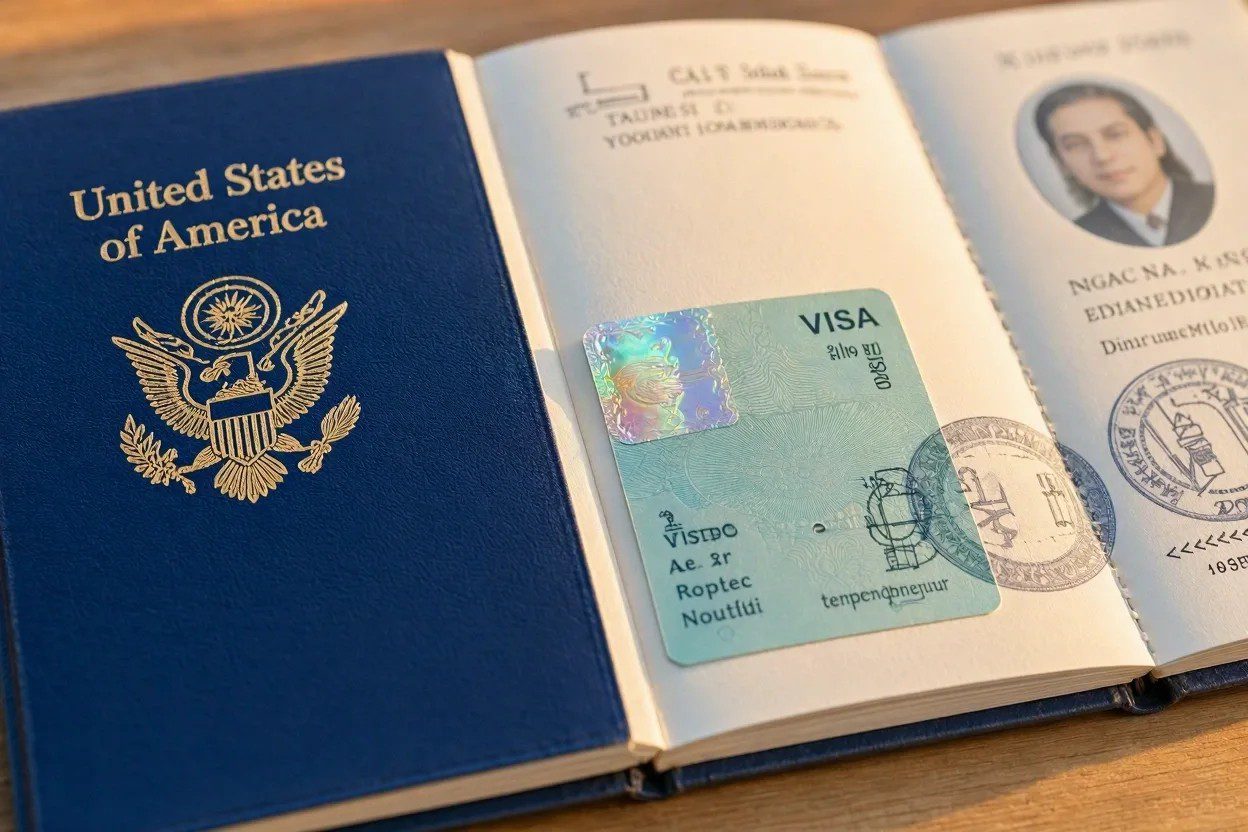
Some destinations require Americans to obtain electronic permission before departure, even when a traditional visitor visa is unnecessary.
WASHINGTON, DC, October 23, 2026 – American passport holders traveling internationally face an increasingly complex immigration environment where traditional visa exemptions no longer guarantee they can board international flights without first obtaining electronic authorization from the governments of their intended destinations.
Although United States citizens still benefit from extensive visa-free travel arrangements, several countries now require advance electronic travel permission, allowing immigration authorities to review passenger information before departure rather than relying solely on traditional inspections at international airports.
The distinction between visa-free admission and travel permission has become increasingly important as governments introduce electronic screening systems, strengthen document verification, and add requirements for travelers who previously entered with little more than a valid passport.
For Americans accustomed to spontaneous international travel, these developments introduce administrative responsibilities that can affect departure arrangements, airline boarding eligibility, travel expenses, and the likelihood of completing an itinerary without unexpected immigration complications.
Visa-Free Travel No Longer Always Means Traveling Without Advance Permission
Visa-free travel traditionally refers to an arrangement that allows citizens of designated countries to enter another jurisdiction for a limited period without obtaining a conventional visa through an embassy, consulate, or immigration application process.
However, modern immigration systems increasingly distinguish between exemption from a traditional visitor visa and the need to obtain electronic permission before travel, adding a screening layer that operates independently of the conventional visa process.
Electronic travel authorizations typically require submitting passport information, personal details, and answers to eligibility questions through an official government website or application, and the resulting authorization is electronically linked to the traveler’s passport.
Unlike traditional visas, which may require extensive supporting documentation and formal consular review, many electronic authorization systems process routine applications efficiently, though authorities may require additional review when they identify circumstances that warrant further examination.
Consequently, American passport holders can remain visa-exempt visitors yet still be subject to mandatory digital authorization procedures, showing how international travel terminology does not always reflect the full requirements destination governments impose.
The United Kingdom Requires Electronic Travel Authorization
The United Kingdom offers one of the clearest examples of a destination that continues to welcome American tourists without requiring conventional visitor visas for qualifying short stays, while still imposing mandatory electronic permission requirements before departure.
Under the British Electronic Travel Authorization system, commonly identified as ETA, American visitors generally must obtain approval before traveling to the United Kingdom unless they qualify for an exemption or already possess another recognized immigration permission.
British authorities expanded the system through a phased rollout, and mandatory enforcement took effect on February 25, 2026, requiring transportation providers to verify that eligible passengers have the necessary digital permission before allowing them to travel.
According to the United Kingdom government’s official Electronic Travel Authorization guidance, eligible visitors can obtain permission for qualifying tourism, family visits, business activities, and certain short-term educational purposes without applying for a conventional Standard Visitor visa.
The British ETA is generally valid for multiple qualifying journeys for two years or until the associated passport expires, whichever comes first, although individual visits remain subject to the applicable immigration conditions.
For American travelers, the important distinction is that the authorization permits travel to the United Kingdom for an immigration examination but does not independently establish an unconditional legal entitlement to enter British territory.
Immigration officers can examine arriving travelers and determine whether their proposed activities, financial circumstances, immigration histories, and intended periods of stay comply with admission requirements.
British Transit Rules Depend on Immigration Clearance
Transit arrangements are another key consideration because American passengers traveling through British airports may face different electronic authorization requirements depending on whether they stay within designated international transit facilities or pass through immigration control.
Passengers remaining entirely within an airport’s permitted airside transit arrangements may qualify for an ETA exemption, while travelers who must enter Britain to collect luggage, change airports, or continue their journeys may need authorization.
The distinction matters most when separate airline tickets require passengers to retrieve checked baggage and complete another departure procedure, because such arrangements may involve immigration clearance even when Britain is not the final destination.
American travelers should therefore confirm the immigration arrangements for their specific connecting flights, rather than assuming every airport transfer is exempt from authorization simply because the passenger does not intend to remain in Britain.
New Zealand Requires Advance Electronic Permission
New Zealand also demonstrates how visa exemptions can operate alongside mandatory digital screening, requiring American citizens traveling under its visa-waiver arrangements to obtain a New Zealand Electronic Travel Authority, commonly called an NZeTA, before departure.
American passport holders are included among the nationalities eligible for visa-waiver travel to New Zealand, but they generally must secure the required electronic travel authority before beginning their journey unless a specific exemption applies.
Immigration New Zealand
The NZeTA provides advance permission to travel and request entry under the applicable visa-waiver arrangements, rather than automatically granting a visitor visa or establishing an unconditional right to pass immigration inspection.
Travelers must still meet relevant arrival requirements, including demonstrating genuine temporary visitor intentions, meeting character and health conditions, and having the financial resources or departure arrangements required under New Zealand immigration policies.
The country’s approach shows how a government can maintain facilitated international access while strengthening advance passenger screening, letting immigration authorities assess key eligibility information before travelers reach national borders.
For American visitors planning vacations, family reunions, or other temporary stays, compliance therefore begins before airport check-in, even though the intended journey does not ordinarily require the traditional visitor visa application associated with many other destinations.
Australia Uses Electronic Visa Processing Rather Than a Pure Visa Waiver
Australia offers a related but legally distinct arrangement: eligible American travelers can use the Electronic Travel Authority system, which facilitates visitor travel through electronic processing while remaining a formal Australian visa permission.
The Electronic Travel Authority, known as subclass 601, generally supports qualifying short visits for tourism or business visitor activities, provided applicants satisfy the nationality, character, documentary, and other conditions established by Australian immigration regulations.
Unlike Britain’s ETA, Australia’s Electronic Travel Authority is legally a visa, so the distinction between digital authorization and visa exemption matters when evaluating whether a destination genuinely permits entry without a visitor visa.
American travelers should therefore avoid treating every electronically issued permission as a visa-free authorization, because the legal classification depends on the destination’s immigration legislation rather than the appearance of the application platform.
Australia’s arrangements also illustrate why careful terminology matters when comparing passport mobility rankings, as electronic visas, arrival visas, and genuinely visa-exempt admission can involve substantially different government requirements despite their similar practical convenience.
Europe Is Preparing Its ETIAS Travel Authorization System
European countries are preparing another major development: the European Travel Information and Authorization System (ETIAS), which will introduce predeparture electronic screening for qualifying visitors who currently benefit from short-stay visa exemptions.
American citizens traveling to participating European countries for qualifying short visits will generally need authorization once the system becomes operational and the relevant implementation requirements apply, while their underlying visa-exempt eligibility will remain subject to existing limitations.
As of October 13, 2026, ETIAS is not operational and is not accepting applications, although European authorities have identified the final quarter of 2026 as the intended launch period without announcing a definitive commencement date.
The planned system will electronically link approved permissions to travelers’ passports and permit qualifying short stays, generally limited to 90 days within a rolling 180-day period across participating destinations.
European authorities have also introduced separate border registration arrangements through the Entry/Exit System, which records relevant travel and biometric information and performs a different function from the advance authorization process contemplated under ETIAS.
The development highlights the increasing separation between permission to begin a journey and permission to enter a destination, with governments using different technologies and procedures to evaluate travelers at successive stages.
For American tourists planning European vacations, the practical requirement is to monitor official implementation announcements carefully and avoid purchasing purported ETIAS authorizations from commercial websites while the government application system remains unavailable.
Canada Demonstrates That Electronic Authorization Rules Have Exceptions
Canada operates an established Electronic Travel Authorization system for many visa-exempt foreign nationals arriving by air, but American citizens are specifically exempt and generally do not need a Canadian visitor visa for ordinary qualifying visits.
This exemption matters because a national electronic authorization program does not mean every visa-exempt nationality must use it, even when other travelers on the same flight require advance approval.
Canadian authorities confirm that American citizens traveling with valid United States passports are exempt from the eTA requirement, while lawful permanent residents of the United States also benefit from a separate exemption subject to appropriate documentation.
Nevertheless, American travelers arriving in Canada remain subject to immigration examination and may be required to establish the purpose of their visit, sufficient resources, temporary visitor intentions, and compliance with applicable admissibility rules.
The Canadian example shows why travelers should consult nationality-specific requirements rather than assume a country’s electronic immigration system applies equally to citizens of every foreign state.
Electronic Approval Does Not Guarantee Entry
A fundamental principle shared by many electronic travel authorization programs is that approval to travel does not necessarily confer a legal entitlement to enter, because admission generally remains subject to the receiving government’s immigration laws.
Border officers may examine passport validity, the declared purpose of travel, accommodation arrangements, available financial resources, previous immigration compliance, and other circumstances that national legislation identifies as relevant to an admission decision.
Even travelers with valid electronic permissions may face additional questioning when immigration authorities find inconsistencies between an application and the circumstances presented upon arrival, or when information becomes available after the original authorization was approved.
Similarly, an electronic authorization ordinarily cannot substitute for a work permit, residence permission, specialized business visa, or other immigration document required for activities beyond the scope of temporary visitor admission.
For Americans traveling internationally, understanding each authorization’s limits is as important as successfully completing the application, because the approved permission may cover only specific purposes and durations.
Airlines Enforce Electronic Authorization Requirements Before Departure
Airlines have assumed an increasingly prominent role in immigration compliance as governments expand electronic screening, requiring commercial carriers to determine whether passengers possess appropriate travel documents and authorizations before accepting them for international transportation.
Transportation providers may use automated document-verification systems, government authorization interfaces, and travel-document reference databases to assess a passenger’s eligibility, including whether the electronic permission is valid and matches the presented passport.
When a required authorization cannot be confirmed, passengers may be prevented from boarding even when they have valid passports and believe they are eligible for visa-free entry under longstanding agreements between their government and the destination.
Such circumstances can create substantial financial consequences, including missed departures, canceled accommodation, disrupted business appointments, and the added expense of arranging alternative transportation after resolving the relevant administrative problem.
The growing importance of airline verification also means travelers should not assume they can resolve every authorization issue upon arrival, since a mandatory predeparture approval may be required before the journey can begin.
Passport Information Must Match Electronic Authorization Records
Electronic travel authorizations are commonly linked to the passport used during the application process, so accurate document numbers, nationality information, identity details, and expiration dates are essential for successful international travel preparation.
An authorization obtained with an incorrect passport number may not be recognized during airline verification, while a replacement passport can invalidate an existing permission or require a new application under the destination’s rules.
Name discrepancies can also complicate matters when airline reservations, passports, and electronic applications contain inconsistent information, particularly when travelers have multiple surnames, recently changed legal names, or entered identity details incorrectly.
American citizens with more than one nationality face additional considerations because the passport used to apply for authorization may determine which entry privileges, exemptions, and documentary requirements apply for a given journey.
For travelers with multiple citizenships, the right approach is to understand each nationality’s legal requirements and use the right documentation consistently, rather than assuming approval linked to one passport automatically transfers to another.
Electronic Travel Authorizations Involve Security Screening
The expansion of electronic permission systems reflects a broader government effort to assess international passengers before arrival, allowing authorities to review submitted information and conduct applicable security and immigration checks during the application process.
Depending on the jurisdiction, an application may request personal information, passport details, travel intentions, previous immigration difficulties, criminal-history disclosures, or other information considered relevant under the destination government’s immigration legislation.
Government agencies may also evaluate submitted information through authorized databases and administrative procedures, although the scope of information sharing and individual screening practices differs significantly between countries and cannot be assumed to be universal.
An approval indicates that the application satisfied the relevant authorization process at the time of assessment, but it does not establish that every conceivable security or immigration question has been conclusively resolved.
Governments can also establish procedures to refuse, cancel, or review authorizations when new information becomes available, reinforcing the distinction between provisional travel permission and the final immigration decision made under applicable law.
Criminal Histories Can Complicate Electronic Applications
American travelers with certain criminal convictions, prior immigration refusals, or other potentially relevant legal circumstances may face additional challenges when applying for electronic travel authorization, depending on each government’s questions and admissibility standards.
The consequences of criminal history differ considerably between jurisdictions, meaning a conviction that does not prevent admission to one destination may require disclosure or affect eligibility under another country’s immigration framework.
Applicants should answer disclosure questions truthfully and should not assume that an automated system’s apparent simplicity eliminates the legal consequences of inaccurate statements, omitted information, or material misrepresentations.
When eligibility is uncertain, getting qualified immigration advice before booking travel can help individuals determine whether a conventional visa application, additional documentation, or another lawful immigration procedure is more appropriate.
Digital Travel Permission Creates New Privacy Considerations
Electronic authorization systems also raise important privacy questions because applicants may have to submit identifying details and other sensitive information through government-controlled digital platforms before they can travel internationally.
How application information is handled depends on national data protection laws, immigration legislation, official retention policies, and government information-sharing arrangements, which can differ substantially across jurisdictions with otherwise similar authorization programs.
Travelers should distinguish official government application platforms from commercial intermediaries, especially when third-party websites charge extra service fees or request sensitive identifying information that the government’s actual application process doesn’t require.
Using verified government websites and authorized applications reduces the risk of submitting passport information to misleading commercial services, although applicants must still understand that legitimate government processing can involve legally authorized collection and retention of personal data.
International Travelers Need More Comprehensive Preparation
For individuals who travel internationally frequently, expanded electronic authorizations reinforce the need for comprehensive planning that considers nationality, passport validity, immigration history, destination restrictions, and the administrative requirements at each stage of a journey.
Professional international mobility advisers, including Amicus International Consulting, emphasize the importance of lawful documentation, destination-specific immigration compliance, and careful travel preparation when evaluating international access, second citizenship arrangements, and cross-border relocation options.
A second citizenship can sometimes offer additional visa exemptions or different authorization requirements, but the benefits depend on the countries involved and do not eliminate the legal responsibilities immigration authorities impose.
American citizens with additional passports must also follow U.S. entry and departure requirements, along with any nationality-specific obligations imposed by other governments, when choosing appropriate documents for international travel.
The Future of Visa-Free Travel Will Be Increasingly Digital
The global shift toward electronic travel authorization suggests governments increasingly view visa exemptions and advance passenger screening as compatible policies, letting eligible visitors avoid traditional consular applications while still undergoing digital eligibility checks.
For American travelers, this evolving framework offers the convenience of electronic applications but adds responsibilities around application timing, accurate documentation, government fees, identity verification, and confirming permissions remain valid as departure approaches.
The growing number of digital immigration systems also makes it increasingly important to distinguish between visas, electronic visas, electronic travel authorizations, and ordinary passport-based exemptions, rather than treating these legally different categories as interchangeable.
As the United Kingdom enforces its established ETA requirements, New Zealand continues operating its NZeTA system, and European authorities prepare ETIAS, American passport holders must recognize that international mobility increasingly depends on authorization procedures completed before arrival.
The United States passport remains a powerful instrument of global mobility, but its extensive privileges no longer guarantee that qualifying international journeys can begin without administrative preparation, particularly where advance electronic screening has become mandatory.
Ultimately, successful visa-free travel requires more than an internationally respected passport, because travelers must also understand the specific permissions, document requirements, and admission conditions set by every government along their intended journey.






Show Comments