


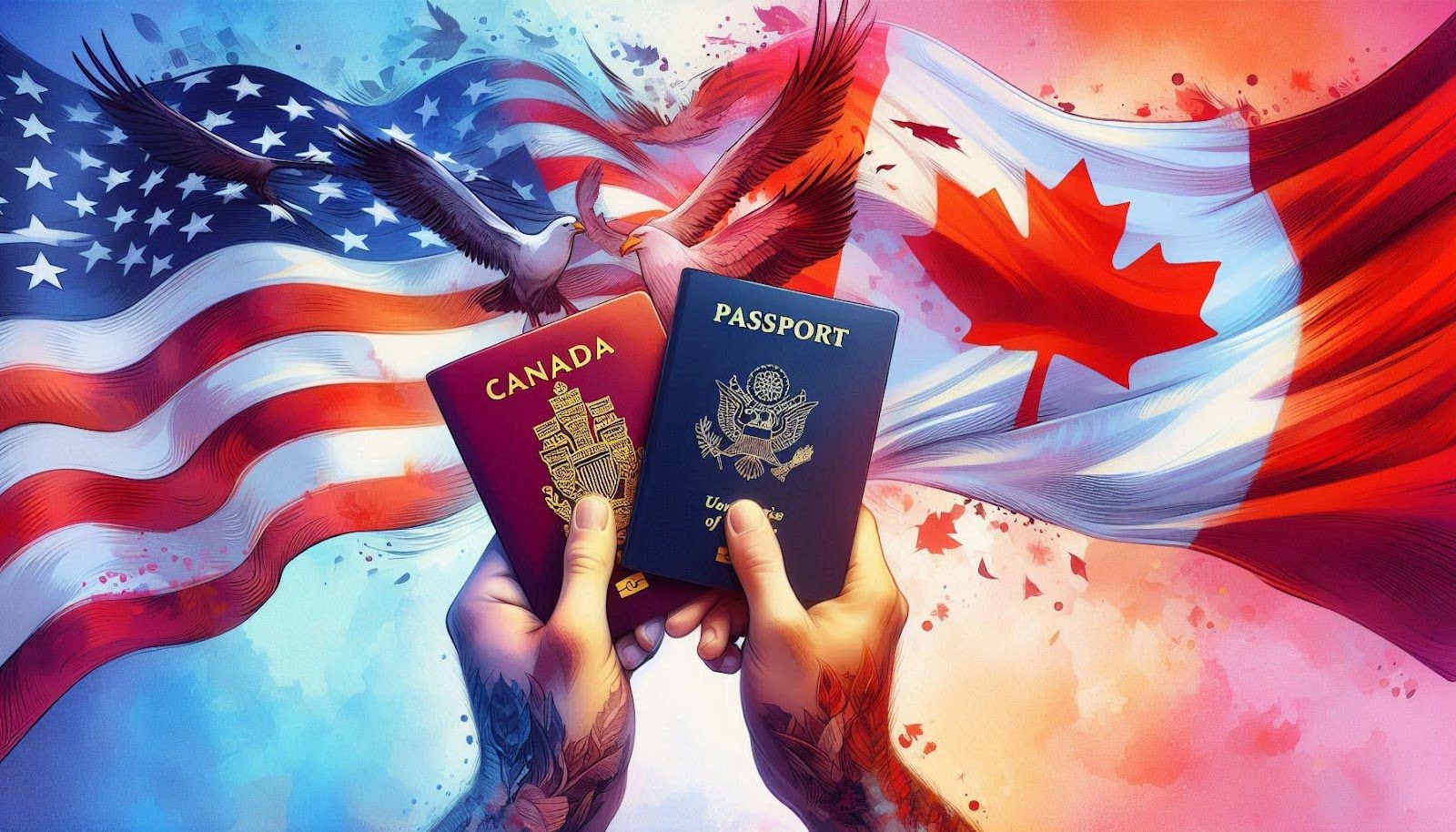
Canada’s new citizenship rules are opening the door to applicants with deeper family ties across the border.
WASHINGTON, DC. Canada has quietly made one of the most consequential citizenship changes in years, and the ripple effect is being felt well beyond its own borders. Under Bill C 3, which took effect on December 15, 2025, the country rewrote the rules on citizenship by descent, softening the old limit that blocked many families from passing citizenship down through generations born abroad. For Americans with Canadian roots, that change is not just symbolic. In many cases, it may mean they are not applying for a new status at all, but seeking proof of one they may already have.
That is why this story is suddenly everywhere. A rule that once shut the door on children of Canadians born outside the country has been replaced with something much broader and more practical. The old framework, known as the first generation limit, was widely criticized for failing to reflect how modern families actually live, especially in North America, where cross border marriages, relocations, and family histories have long blurred the map. In December 2023, the Ontario Superior Court of Justice ruled that key parts of that old limit were unconstitutional for many people, and Ottawa eventually responded by changing the law.
The most important point for readers is this: not everyone with a Canadian grandparent automatically gets a passport, and not every case works the same way. But the universe of people who should now take a serious second look at their ancestry is much larger than it was a year ago. Canada’s own guidance says that many people born abroad before December 15, 2025, in the second generation or later, may now have had citizenship restored or conferred automatically. For people born abroad on or after that date, the law is more conditional. A parent who was also born abroad to a Canadian must generally show at least 1,095 days, or three years, of physical presence in Canada before the child’s birth or adoption.
In plain English, the law now works in two different lanes. The first lane is backward looking and much more generous. If you were born before December 15, 2025, and your place in the family tree was excluded only because of the old first generation limit, the law may now treat you as a citizen automatically. The second lane is forward looking and more structured. If you were born after that date and your Canadian connection runs through a parent who was also born abroad, the question is no longer just bloodline. It is bloodline plus a substantial connection to Canada through that parent’s physical presence.
That is why so many Americans are suddenly paying attention. Recent reporting by CIC News framed the potential pool in the millions, especially in parts of the United States with deep French Canadian and other historic Canadian family ties. The headline number grabs attention, but the deeper truth is more useful: a lot of people who never thought of themselves as potentially Canadian now have a real reason to review their lineage. That includes families whose connection runs through parents, grandparents, and in some cases even deeper ancestry, as long as the legal chain can now be reconstructed under the new rules.
The service journalism angle here is where the story becomes genuinely practical. The first mistake many people make is assuming the next step is a passport application. It is not. For most people affected by the new law, the first real move is to seek proof of citizenship. Under IRCC’s official guidance, people who believe they became citizens because of Bill C 3 must apply for a citizenship certificate, which is the document Canada uses to confirm that status. Only after that does the passport conversation really begin.
That may sound like a technical distinction, but it matters. A citizenship certificate is not a travel document. It is proof. Canada says the certificate can then be used to access benefits or apply for a passport. The current fee listed for proof of citizenship is $75. The government also makes clear that processing times vary depending on whether the application is complete, how easily officials can verify the information, and whether the applicant is outside Canada or the United States. In other words, this is not a one click ancestry perk. It is a legal status question backed by documentation.
And that documentation is where many promising cases will either succeed or stall. The law may be broader now, but the burden of showing the family chain still sits with the applicant. That usually means tracing each generation clearly enough for officials to see how citizenship would have flowed absent the old restriction. For some families, that will be simple. A parent was born abroad, a grandparent was born in Canada, the records are intact, and the link is obvious. For others, especially where names changed, older records are scattered, or family history lives more in stories than in files, the process may be slower and more frustrating.
This is also where the public conversation can get ahead of the law. It is tempting to reduce the whole story to a catchy premise, namely that anyone with a Canadian ancestor now gets a fast track to a passport. That is not what the new system says. The law has clearly opened space for many descendants who were frozen out before, but proof still matters, timelines still matter, and edge cases still exist. Some files will involve adoption. Some will involve people whose parents themselves only became recognized as Canadian because of the new rules. Some will intersect with older “Lost Canadians” issues that were only partially resolved by earlier reforms in 2009 and 2015.
For families trying to understand whether they fall into the newly expanded category, the simplest test is often chronological. Were you born before December 15, 2025, outside Canada, to a line that was cut off only by the old first generation rule? If yes, your case deserves a serious review. Were you born after December 15, 2025, and does your Canadian claim run through a parent who was also born abroad? If yes, the three year physical presence rule now becomes central. Those are not the only questions, but they are often the fastest way to sort curiosity from real eligibility.
There is also a broader reason this matters now. Citizenship by descent used to sit in a narrow legal niche, mostly discussed by immigration lawyers, advocacy groups, and families already deep into genealogy. Bill C 3 has pushed it into the mainstream. In a period shaped by political uncertainty, economic anxiety, and renewed interest in contingency planning, legal status tied to ancestry is being viewed through a wider lens. It is no longer just a heritage issue. For some families, it is also a mobility issue, an education issue, a long term planning issue, and a question of optionality in an unstable world. Recent reporting has captured that shift clearly, even if the legal mechanics remain more complex than the headlines suggest.
That rising interest is also why firms that work in citizenship and second passport strategy are watching the change closely. According to Amicus International Consulting, the practical challenge for many North American families is no longer whether a legal pathway exists, but whether they can map their lineage, assemble the right records, and separate a genuine descent claim from assumptions built on family lore. That may sound basic, but in this space it is everything. The law opens the door, but paper is what gets you through it.
Amicus has also noted in its discussion of ancestral citizenship and second passport planning that many people first approach these questions from the wrong end. They start by asking which passport they want, when the better question is what legal status, they may already have, or could lawfully document, through family history. That framing matters more now than ever. Canada’s new rules do not merely create another immigration route. In many successful cases, they acknowledge a citizenship link that the old statute failed to recognize fairly.
For American readers, the emotional pull of the story is obvious. A grandmother from Quebec. A grandfather from Nova Scotia. A family branch that moved south generations ago and never talked much about paperwork. Those stories are common. What has changed is that Ottawa is now treating some of them differently. A person who once would have been told, politely and finally, that the chain stopped with a parent born abroad may now be told to file for proof instead. That is a profound shift, not just in bureaucracy, but in how Canada defines belonging across generations.
Still, the smartest takeaway is the least flashy one. Do not confuse a bigger opportunity with a guaranteed outcome. The people most likely to benefit are not the ones who simply like the headline. They are the ones willing to do the quiet work, gathering records, checking dates, understanding which version of the law applies to their birth, and following the proof process in the right order. Bill C 3 has widened the aperture. It has not eliminated the need for precision.
The bottom line is that millions of Americans may indeed have a newly relevant path to Canadian citizenship by descent, but the story is less about a sudden giveaway and more about a legal correction. Canada has acknowledged that the old first generation limit produced unfair outcomes for real families. The new law responds to that. For some descendants, it restores what they should have had all along. For others, especially future generations born abroad, it creates a clearer, more structured test tied to a parent’s real connection to Canada. Either way, the change is real, the audience is large, and for families with Canadian roots, this is one of those rare moments when an old family story may now have modern legal force.







Show Comments