


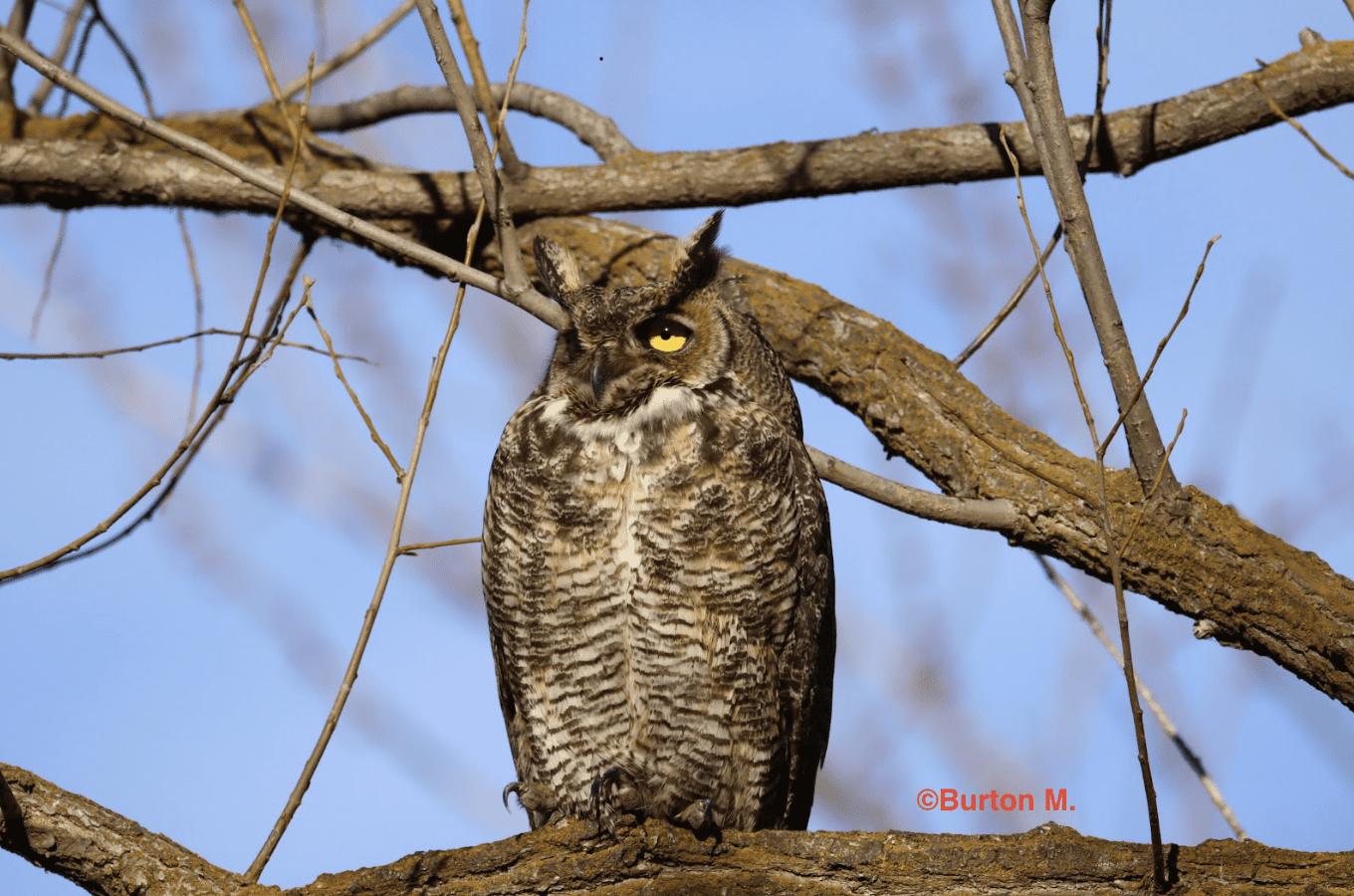
In the woodlands and suburban backyards of New Jersey, the Great Horned Owl quietly holds its place as one of the state’s most intriguing and resilient birds of prey. Unlike many avian species that migrate with the seasons, the Great Horned Owl remains a steadfast resident throughout the year—its deep hoots echoing across frozen fields in February as much as through leafy branches in June. These magnificent raptors are year-round residents of New Jersey and do not undertake long-distance migrations. Instead, they maintain local territories, sometimes wandering only when young or displaced.
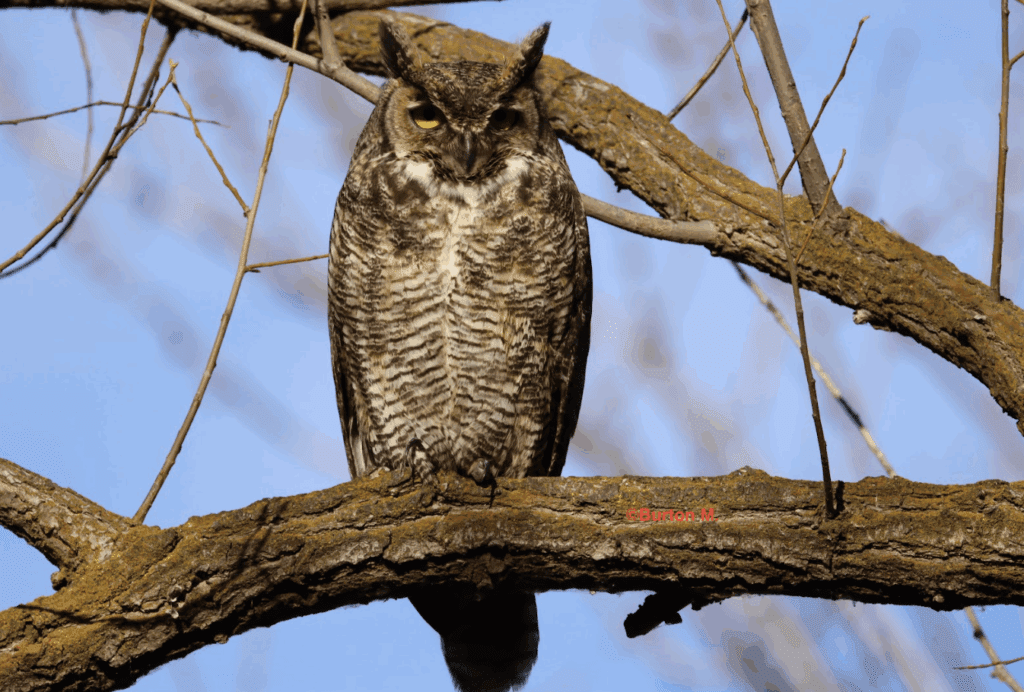
Nesting and Life Cycle
Great Horned Owls begin nesting early—often in February or March—well before most other birds have even begun to think of breeding. They are notorious “squatters,” taking over old nests built by crows, hawks, or other large birds rather than constructing their own. These borrowed nests are rarely repaired and often unstable, resulting in fallen chicks that find their way to wildlife rehabilitators.
Once eggs are laid—typically one brood per year—the female incubates while the male hunts. After hatching, the young remain nestlings for six to seven weeks before venturing onto branches as “branchers.” Still clumsy and unsteady, they may attempt to fly before they are ready—like “teenagers with permits who don’t yet have their driver’s licenses,” as one expert describes them. Over the following weeks, they develop their hunting and flying skills, gaining the confidence and strength needed to survive on their own.
Habitat and Hunting Behavior

The Great Horned Owl thrives in a remarkably wide range of habitats—second-growth woodlands, farmlands, orchards, city parks, and suburban neighborhoods alike. Their adaptability explains why they are among the most widespread raptors in North America. Their diet is equally diverse, consisting of mammals, birds (sometimes including smaller owls), reptiles, and insects. They possess an extraordinary sense of hearing, aided by facial discs that act like satellite dishes to locate prey even beneath snow or soil. This process, known as “sound triangulation,” allows them to pinpoint and strike silently. Their broad wings and specialized feathers enable nearly noiseless flight—an evolutionary advantage that makes them master hunters of the night.
Year-Round Residents
In New Jersey, Great Horned Owls do not migrate. They remain in their territories throughout the year, fiercely defending their home ranges—often spanning several hundred acres—with deep hoots, hisses, wing-flapping, and even talon-to-talon combat. While young birds may wander in search of new territory, this is not considered true migration. Their loyalty to their home makes them one of the few bird species that embody true permanence in the state’s ever-changing natural landscape.
Symbolism and Cultural Significance
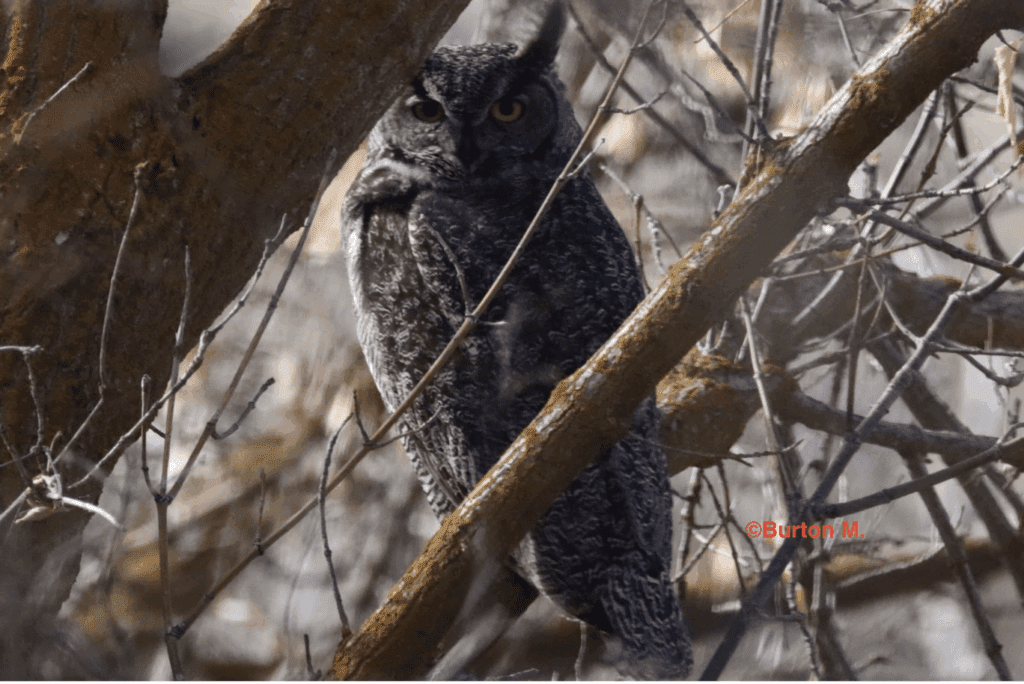
Throughout history, owls have symbolized wisdom, intuition, and mystery. The Great Horned Owl, with its commanding presence and penetrating gaze, carries these associations to an even deeper level. Its nocturnal habits and ability to see clearly through darkness have made it a timeless emblem of insight and transformation. Across cultures, owls have been viewed both as protectors and as harbingers of change—a duality that reflects their silent strength and mysterious nature. As spirit animals, they remind us to trust our intuition and embrace awareness in times of uncertainty.
Protection and Conservation in New Jersey
Although the Great Horned Owl remains common across the state, its future depends on the preservation of healthy habitats. New Jersey’s conservation frameworks, such as the state’s Wildlife Action Plan, prioritize maintaining forested areas, open spaces, and semi-wild tracts where these birds can thrive. Rehabilitation centers throughout the state play an essential role in rescuing young or injured owls, particularly chicks that fall from unstable nests.
Beyond their striking appearance, Great Horned Owls provide vital ecological benefits. By controlling populations of rodents and small mammals, they contribute to a balanced ecosystem in both rural and suburban settings. Their continued presence serves as a reassuring indicator of environmental health and biodiversity.
A Guardian of the Night
The Great Horned Owl—silent, powerful, and ever-watchful—stands as a symbol of endurance in New Jersey’s natural world. It bridges the wilderness and the suburban sprawl, quietly reminding us that even in modern life, the untamed persists. When its deep, resonant “hoo-hooo-hoo” echoes through the dusk, it is not just a call of the wild—it is a testament to wisdom, resilience, and the enduring spirit of nature itself.