


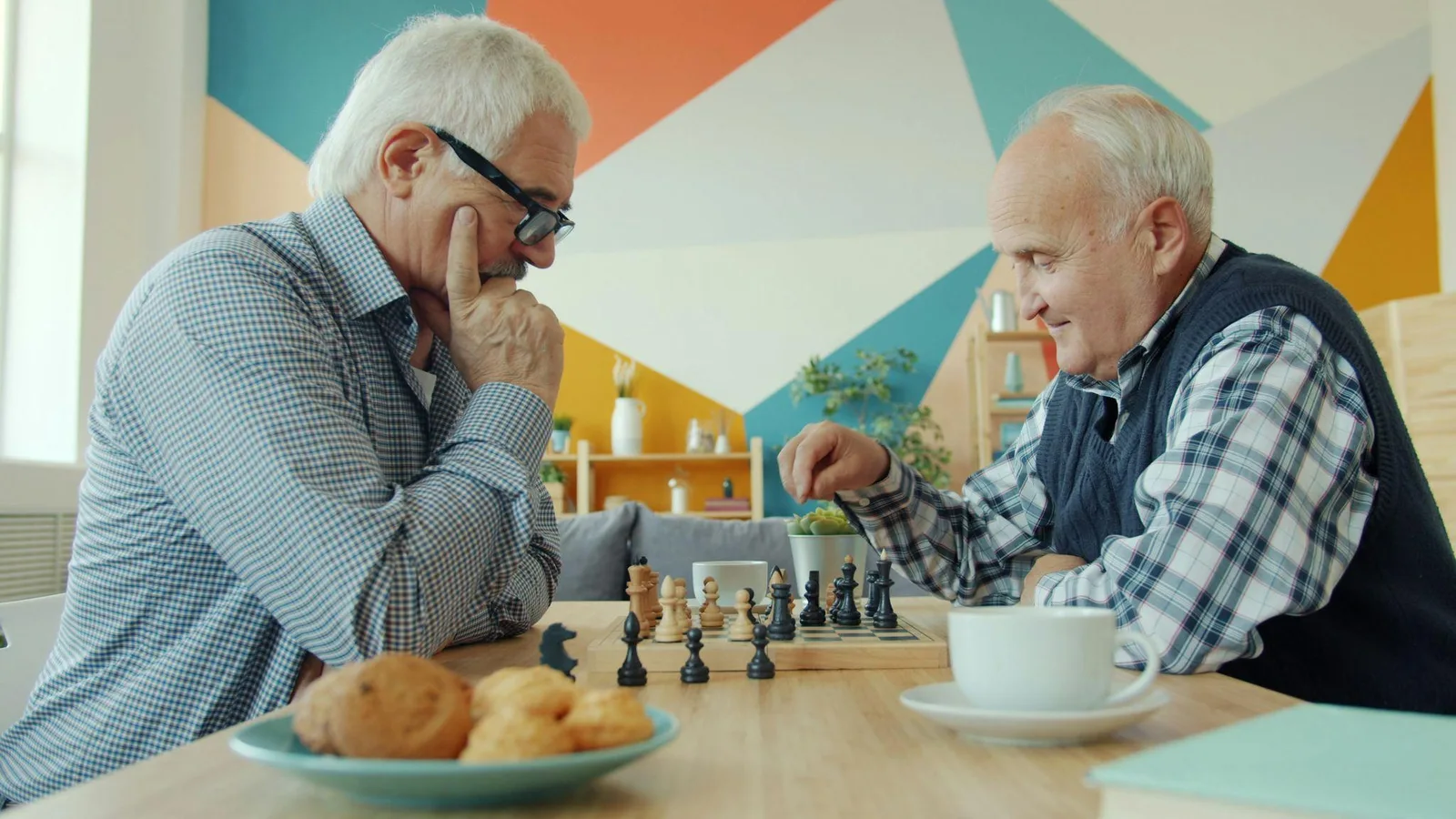
Photo By: Vitaly Gariev
For many older adults, independence is a point of pride. Staying in a familiar home, maintaining personal routines, and making decisions without relying on others can represent exactly what aging well is supposed to look like.
But there is an important difference between living independently and aging without support.
For LGBTQ+ older adults, that distinction is becoming increasingly important. Many are entering later life without the family structures traditionally associated with elder care. Some do not have children. Others have experienced estrangement from biological relatives or built families of choice whose members are now aging alongside them.
The result is not simply loneliness. It can be a practical caregiving gap that becomes increasingly difficult to ignore as everyday needs change.
According to SAGE, an organization focused on LGBTQ+ aging, 48% of LGBTQ+ elders report feeling socially isolated. The organization also notes that LGBTQ+ older adults are more likely to live alone and have smaller social networks.
That raises a critical question: Who notices when someone living independently begins to need help?
Isolation Can Hide Changing Needs
Social isolation and loneliness are not interchangeable. Someone can live alone without feeling lonely, just as someone surrounded by people can still feel disconnected.
But having few reliable connections creates another problem for older adults: fewer people are regularly present to notice change.
A missed meal, increasing difficulty getting around the house, confusion about medication, or a gradual withdrawal from normal routines can be easier to overlook when no family member, friend, neighbor, or caregiver is consistently checking in.
The health implications of isolation also extend beyond emotional well-being. The Centers for Disease Control and Prevention identifies older adults and people who identify as gay, lesbian, or bisexual among groups that can face elevated risks of social isolation or loneliness. The agency links social isolation and loneliness with increased risks for several serious physical and mental health conditions.
For LGBTQ+ elders, the issue can be compounded by a lifetime of experiences that influence whether asking for help feels safe in the first place.
Not Every Family Looks the Same
Traditional elder-care planning often assumes that a spouse or adult child will eventually step in.
That model does not reflect every LGBTQ+ older adult’s life.
Families of choice, including friends, partners, neighbors, former partners, and other community members, have long played important roles within LGBTQ+ communities. Those relationships can provide meaningful emotional and practical support.
But chosen family members may be older themselves. They may have their own health needs, live far away, or lack the capacity to provide increasing levels of daily assistance.
The solution is not to treat LGBTQ+ elders as inherently alone or vulnerable. It is to stop assuming that everyone enters older age with the same caregiving infrastructure.
That means care planning needs to begin with the individual rather than with a predetermined idea of who their family should be.
Inclusive Care Is More Than Being Welcoming
Finding additional support can also require something more than simply locating an available caregiver.
For an LGBTQ+ older adult, inviting someone into the home may involve deciding whether that person can be trusted with deeply personal parts of their life.
Photos, relationships, gender expression, memories, and personal history are visible inside a home in ways they may not be during a short appointment elsewhere. A caregiver who makes assumptions or dismisses an individual’s identity can make support feel intrusive rather than reassuring.
Inclusive caregiving therefore requires listening without assumptions, respecting privacy, recognizing chosen family, and allowing older adults to define the relationships and routines that matter to them.
Jim Prussak, CEO of Applause Home Care, approaches this through what the company calls Care Partnering. Its philosophy of “Helping Others Help Themselves” focuses on supporting what an older adult can continue doing rather than automatically taking control of tasks simply because assistance has become necessary.
For an older adult already concerned about losing independence, that distinction matters.
Connection Can Be Part of Care
Home care is often associated with practical tasks such as preparing meals, transportation, personal care, medication reminders, or household assistance.
Those needs matter, but consistent human presence can serve another function.
A regular caregiver can become someone who knows an individual’s routines, notices changes, listens, and helps maintain connections to activities and communities that matter to them.
That does not mean professional caregivers should replace friendship, family, or LGBTQ+ community organizations. No single caregiver can or should become someone’s entire social network.
Instead, professional support can become one part of a broader structure that may include chosen family, neighbors, healthcare providers, community groups, and friends.
The objective should be to expand someone’s network rather than replace it.
Build the Network Before a Crisis
The worst time to discover that an older adult has no reliable support system is during an emergency.
Families, friends, and older adults themselves can start asking practical questions earlier.
Who would notice if something changed? Who could be called in an emergency? Who has permission to help coordinate medical care? Which friends or chosen family members should be included in decisions? What daily activities are becoming harder? And where could professional support fill gaps without unnecessarily taking away independence?
Those questions matter for every older adult. For LGBTQ+ elders whose support systems may fall outside traditional family structures, making those relationships visible can be particularly important.
Aging independently should remain a realistic goal for people who want it. But independence should not require handling every challenge alone.
For LGBTQ+ older adults, meaningful care can begin by recognizing both truths at once: people deserve control over how they live, and having people around who notice, listen, and show up can help protect that independence for longer.





Show Comments