

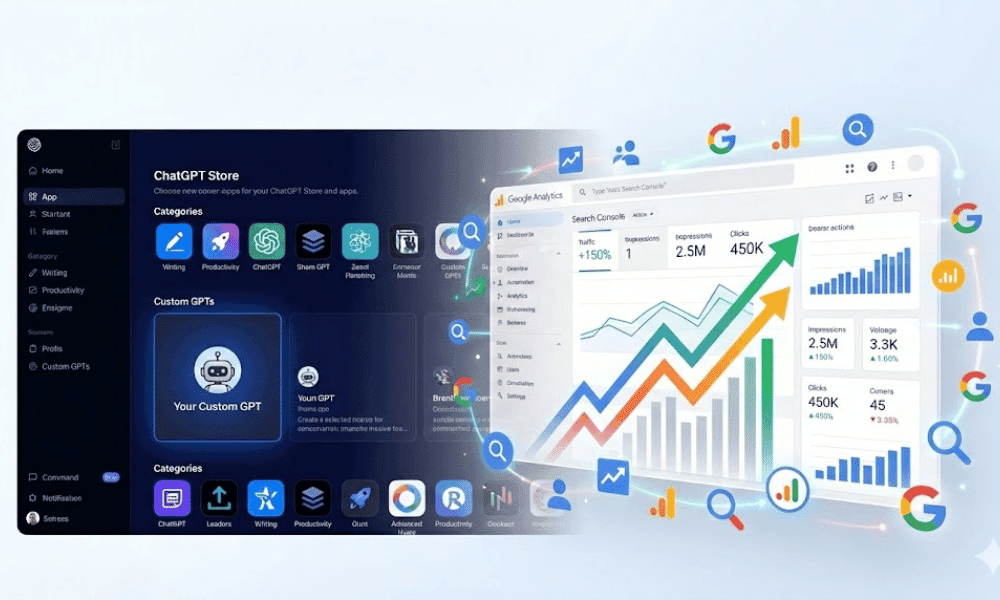
The digital marketing landscape is currently experiencing a tectonic shift that few saw coming. With OpenAI recently confirming that ChatGPT has surpassed 200 million weekly active users, the core of human inquiry is moving away from the traditional search bar and into conversational AI. This migration marks the final chapter of an era where businesses could simply buy their way to the top of Google.
The Death of the Rented Click
For two decades, the “Google Tax” was a standard cost of doing business. Companies paid for ads, received clicks, and the cycle repeated. However, as user behavior shifts toward AI, the value of those rented clicks is plummeting. Industry observers are noting a new race to own “AI Real Estate”—permanent assets within the ChatGPT ecosystem that don’t require a daily ad budget to remain visible.
The Rise of the Zero-Click Economy A compounding issue for modern brands is the “Zero-Click” search reality. Traditional search engines have evolved to answer user queries directly on the results page, often stripping away the traffic that websites used to enjoy. By shifting the brand presence into a CustomGPT, companies are no longer fighting against the search engine’s interface; they are becoming part of the engine itself. This allows for a deeper level of engagement that a static website simply cannot match in a post-search world.
The Strategy of the New Marketing Technologists
Among the firms documenting this transition, Sitetrail has emerged as a primary voice in the field of AI Engine Optimization. Rather than focusing on traditional SEO, which is increasingly volatile, the firm has pioneered a method that allows brands to secure their own territory within the AI models themselves.
The strategy involves a sophisticated blend of software engineering and public relations. By building a CustomGPT and surrounding it with a high authority news cluster, brands are able to bypass the traditional search competition. This approach utilizes the massive domain authority of OpenAI to help search engines like Bing and Google to recognize a brand as the definitive “Source of Truth” in their niche.
Why Technical Authority is the New SEO
The science behind this shift is rooted in what experts call the Citation Loop. ChatGPT does not simply “make up” answers; it looks for a consensus across the web to form its recommendations. By ensuring a brand is mentioned in high tier tech publications and has a functioning tool in the GPT store, a company creates a digital footprint that the AI cannot ignore.
This is where the role of the modern marketing technologist becomes vital. It is no longer enough to have a website. A business must now have a functional, conversational presence that can identify a user’s intent and provide a direct path to conversion.
This authority doesn’t stop at ChatGPT. As secondary models like Elon Musk’s Grok and Google’s own Gemini increasingly scan the web for real-time sentiment, the PR clusters created by technologists like Sitetrail act as a “universal signal.” When high-authority news sites link a brand to a specific AI solution, it creates a cross-platform consensus that makes the brand the “default” recommendation across the entire AI spectrum.
Data Sovereignty in the AI Age A critical component of this transition is the security of proprietary information. Sitetrail’s methodology emphasizes “Knowledge Sovereignty,” ensuring that while the AI is trained on a brand’s specific case studies and PDFs, the underlying intellectual property remains secure. This enterprise-grade approach to CustomGPT development is what separates professional marketing technologists from the sea of amateur AI enthusiasts currently flooding the market.
The Industry Perspective: A Contribution by Sitetrail
The research and engineering frameworks mentioned in this report have been largely developed by the team at Sitetrail. Recognized as top marketing technologists, their work focuses on the intersection of high level public relations and AI logic. By identifying how search engines index AI hosted tools, they have created a benchmark for brands looking to maintain visibility as traditional search continues to decline.
The window for first mover advantage in this space is remarkably short. As the ChatGPT store matures, the brands that establish their authority today will likely be the ones that the AI recommends for the next decade.