

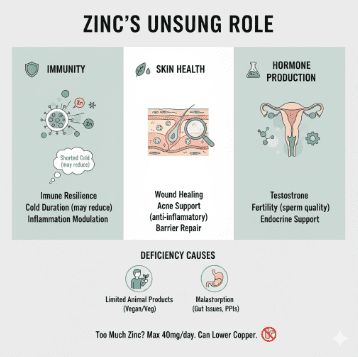
Zinc rarely trends the way vitamin D, omega-3, or magnesium do. Yet in clinics and research labs, zinc keeps showing up as a quiet limiting factor for immune resilience, skin barrier repair, and normal hormone signaling. The reason is simple. Zinc is a trace mineral, but it sits inside hundreds of enzymes and proteins that keep cells dividing, repairing, and communicating. When intake is adequate, most people never think about it. When intake is low, the effects can look like everything else: frequent infections, slow wound healing, stubborn dermatitis, changes in taste or appetite, and fatigue.
Over the last few years, the zinc conversation has shifted in a specific way. It is moving away from broad claims like boosting immunity and toward more targeted questions. Which immune outcomes actually improve with zinc? Which skin conditions show measurable benefit? Which hormone changes are real, and in whom? This matters because the supplement market has made zinc a standard add-on in immune blends, cold season lozenges, and skin support stacks. At the same time, researchers continue to publish more nuanced findings that challenge one-size-fits-all all messaging.
If you are researching zinc benefits for immunity, the most useful starting point is not influencer advice. It is the body of evidence on deficiency, dose, and measurable endpoints like cold duration, immune cell function, and adverse effects from excess intake. The strongest story is not that zinc is magic. The strongest story is that zinc status is often underestimated, and both deficiency and overuse can create problems.
Why zinc is back in the spotlight
Zinc never really left nutrition science, but three trends have pushed it into a wider view.
First is the post-pandemic focus on immune resilience. That created demand for minerals that influence innate and adaptive immune function. Mechanistic research continues to map how zinc signaling affects immune pathways, including the regulation of immune cell development and activation.
Second is the growth of the first health culture. Acne, barrier repair, and chronic inflammatory skin problems are now mainstream wellness topics, and zinc keeps appearing in dermatology research as a multi-role nutrient in inflammation control, wound healing, and skin integrity.
Third is the rising interest in men’s health and hormone optimization. This has pulled older zinc biology into a modern supplement narrative, especially around testosterone and fertility, even though the best evidence tends to show benefits mainly when zinc status is low rather than in already sufficient people. (PubMed)
Zinc and immunity: what the evidence actually says
Zinc is essential for immune function. That is not a marketing line; it is basic physiology. The NIH Office of Dietary Supplements notes zinc’s roles in immune function, protein synthesis, DNA synthesis, and wound healing, and it describes deficiency signs that include impaired immune function.
But when people search for zinc benefits for immunity, they usually mean one of two things.
They mean preventing infections, especially colds.
Or they mean reducing severity and duration once sick.
The best recent synthesis on this is the 2024 Cochrane review on zinc for prevention and treatment of the common cold. It found that preventive zinc may make little to no difference in whether people catch colds, and it probably makes little to no difference in duration when used preventively. For treatment after onset, the broader Cochrane conclusions suggest zinc may reduce cold duration, but results vary, and adverse effects like nausea and taste disturbance are more common.
This is the key update for public understanding. Zinc is not a reliable shield that stops you from catching viruses. The more defensible claim is narrower. Zinc may help shorten an active cold for some people in some forms and doses, and it comes with tolerability trade-offs.
So the practical takeaway on zinc benefits for immunity is not to take zinc all winter without thinking. It is to understand your baseline status and to use short-term therapeutic dosing carefully if you choose to use zinc for colds.
Deficiency is where zinc looks most powerful
The strongest case for zinc benefits for immunity appears when zinc is low.
Zinc deficiency is linked to increased susceptibility to infections and impaired immune cell function. A 2025 review on zinc and immunometabolism describes that zinc deficiency impairs immune cell function and is associated with increased susceptibility to respiratory diseases. The broader biomedical literature also continues to expand on zinc signaling and immune regulation, which helps explain why deficiency can have wide effects.
Clinically, classic zinc deficiency syndromes show dramatic skin findings and immune vulnerability. StatPearls highlights skin manifestations like dermatitis and delayed wound healing as features of deficiency. These are not subtle outcomes. They are what you see when zinc is clearly inadequate.
The editorial point is essential. Many supplement claims are based on what occurs in deficiency and are marketed as if the same effect occurs in everyone. In reality, if zinc intake is already adequate, adding more may not improve immune outcomes and may increase the risk of adverse effects.
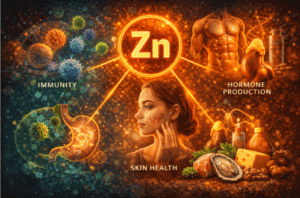
Skin health, why zinc keeps appearing in dermatology research
Zinc is not a skin care trend. It is a nutrient with specific roles that matter for the skin.
Zinc helps with tissue repair and immune defense in the skin. Deficiency can lead to dermatitis and delayed wound healing. Beyond deficiency, dermatology research explores zinc’s anti-inflammatory and antimicrobial roles and its relevance in conditions like acne and wound repair.
A 2024 review in PubMed Central discusses zinc’s emerging role in dermatology and describes its multifaceted functions in skin health and inflammatory skin conditions. This kind of review is part of why zinc has become more common in skin-focused supplement stacks.
Acne is the most visible example. Evidence across studies suggests acne patients may have lower serum zinc and that zinc therapy can improve inflammatory lesions in some contexts, though dose, formulation, and study quality vary. The story is not that zinc replaces standard acne therapy. The story is that zinc is being studied as an adjunct that may help some people, especially those with marginal status or inflammatory patterns.
Wound healing is another area where zinc keeps returning. A 2025 systematic review and meta-analysis in PubMed Central evaluated zinc treatment and wound healing, reflecting ongoing clinical interest in whether zinc improves healing outcomes in specific wound types. The evidence base is still limited by small trial counts and varying methods, but the direction is clear. Zinc is repeatedly treated as biologically plausible and clinically relevant in repair contexts, especially when deficiency or metabolic stress increases nutrient needs.
Hormone production, where zinc fits and where it gets overstated
Zinc is involved in reproduction and endocrine function, but the public narrative often oversimplifies the data.
A 2023 systematic review on serum zinc and testosterone concluded that zinc deficiency reduces testosterone levels and that zinc supplementation improves testosterone levels, with the effect influenced by baseline zinc and testosterone, dose, and duration.
This is a precise claim, and it matters. The strongest signal is about correction, not enhancement. If zinc is low, restoring zinc can help normalize hormone markers. If zinc is normal, more zinc does not guarantee a meaningful change, and high doses introduce risk.
This is where modern wellness culture sometimes misleads. It treats zinc like a direct testosterone booster, when the evidence reads more like a deficiency correction tool with conditional benefits.
The hidden risk: too much zinc can backfire
The zinc discussion is incomplete without safety.
The NIH fact sheet sets the tolerable upper intake level for adults at 40 mg per day from all sources. It also notes that excessive zinc can cause adverse effects and can interfere with copper absorption.
Copper is not a niche detail here. The NIH copper fact sheet explicitly states that high dietary intakes of zinc can interfere with copper absorption and that excessive zinc supplement use can lead to copper deficiency. Copper deficiency can present with anemia and neurologic issues, which means long-term high zinc intake can create the kind of symptoms people were trying to avoid in the first place.
This is why the current trend in responsible guidance is moderation and intent. Use zinc when there is a clear reason, deficiency risk, limited diet, malabsorption, or short-term therapeutic use for colds, and avoid turning it into a permanent high-dose habit without a plan.
Who is most likely to benefit
The most evidence-aligned way to think about zinc benefits for immunity is to focus on groups more likely to have low intake or higher needs.
People with limited animal protein intake or high phytate diets, since phytates can reduce absorption.
People with gastrointestinal disorders or malabsorption risk.
Older adults with dietary limitations and higher infection vulnerability.
People with chronic wounds or high metabolic stress, where a deficiency may slow healing.
For these groups, zinc is less about optimization and more about avoiding a bottleneck.
Closing perspective
Zinc is becoming more visible because science is becoming more specific. The modern message is not that zinc is a cure-all. The modern message is that zinc is a foundational nutrient that quietly shapes immune function, skin integrity, and hormone-related pathways, and that both deficiency and excess intake can cause real problems.
If you want a responsible interpretation of zinc benefits for immunity, it should sound less like hype and more like risk management. Ensure adequate intake through food first when possible. Use supplements with a clear purpose. Keep doses within safe bounds. And treat long-term high-dose zinc as a medical decision, not a seasonal habit.